Celebrations set for June 7 and 8 to honour local and national legacy
Carman United Church will celebrate 100 years as part of the United Church of Canada with a weekend of events this June.

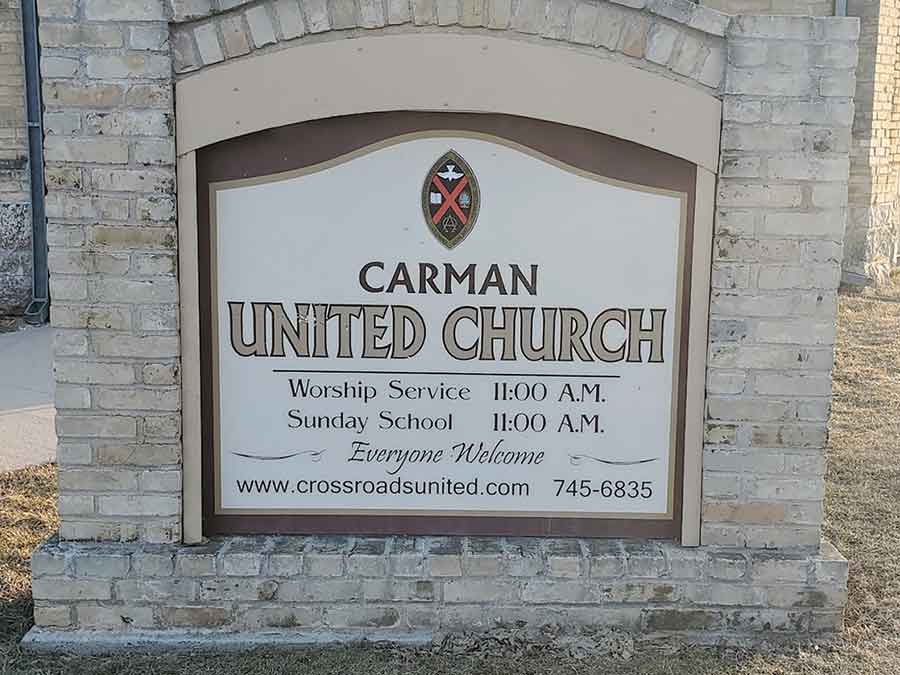
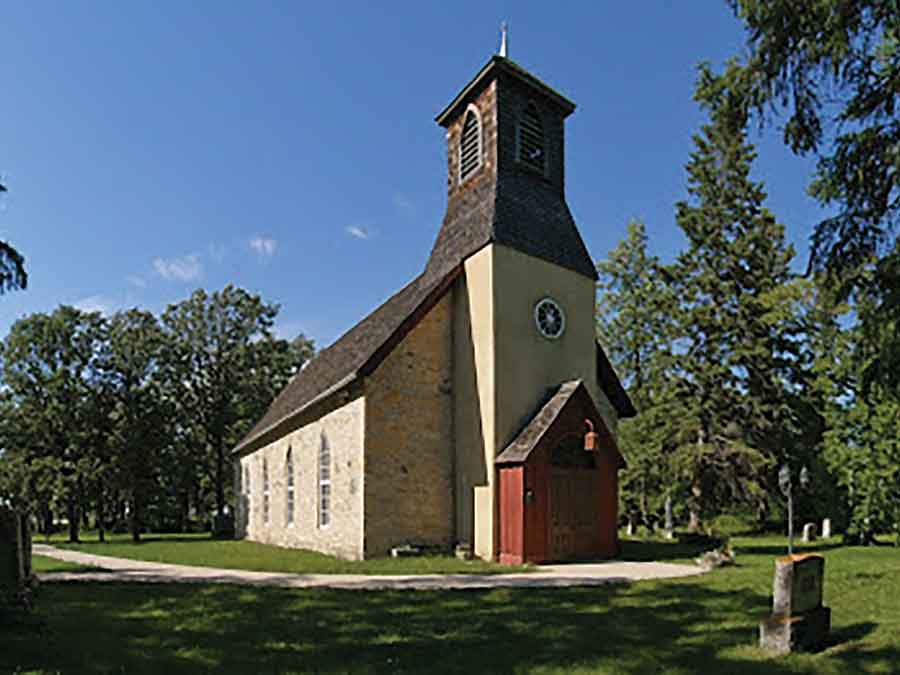

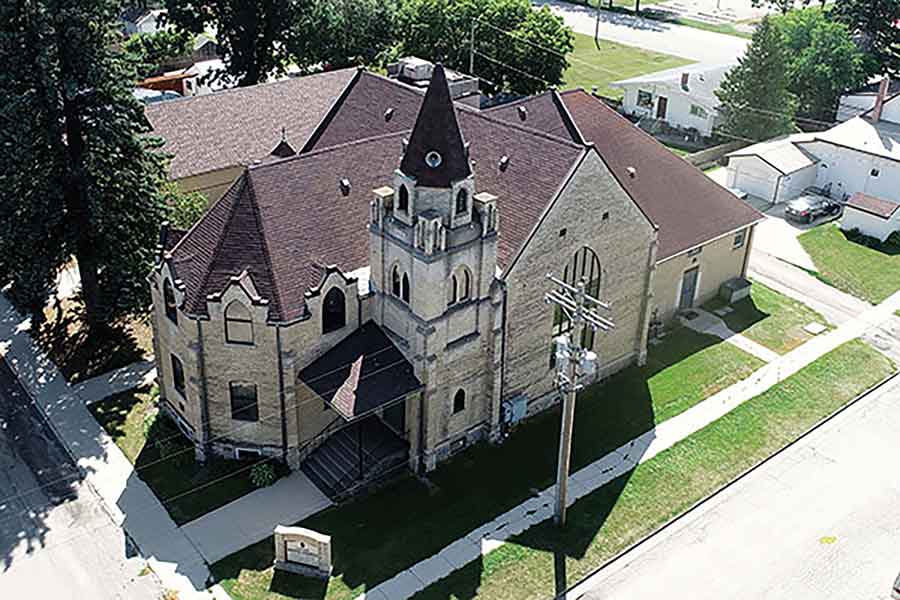
Carman United Church, originally built in 1907, will host a centennial celebration on June 7 from 2 to 4 p.m. to mark 100 years as part of the United Church of Canada
The celebrations begin Saturday, June 7 from 2 to 4 p.m. with a tea at the church featuring displays of historical memorabilia, photos and vintage dresses. On Sunday, June 8, a special worship service will take place at 11 a.m., followed by a community barbecue. Everyone is welcome to attend both events. A silver collection will be taken in support of the Mission and Service fund.
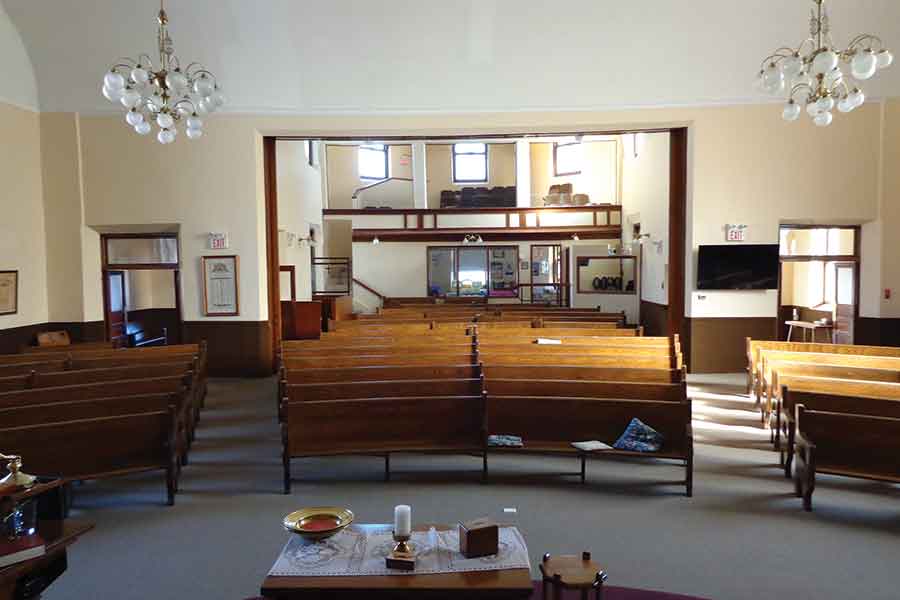
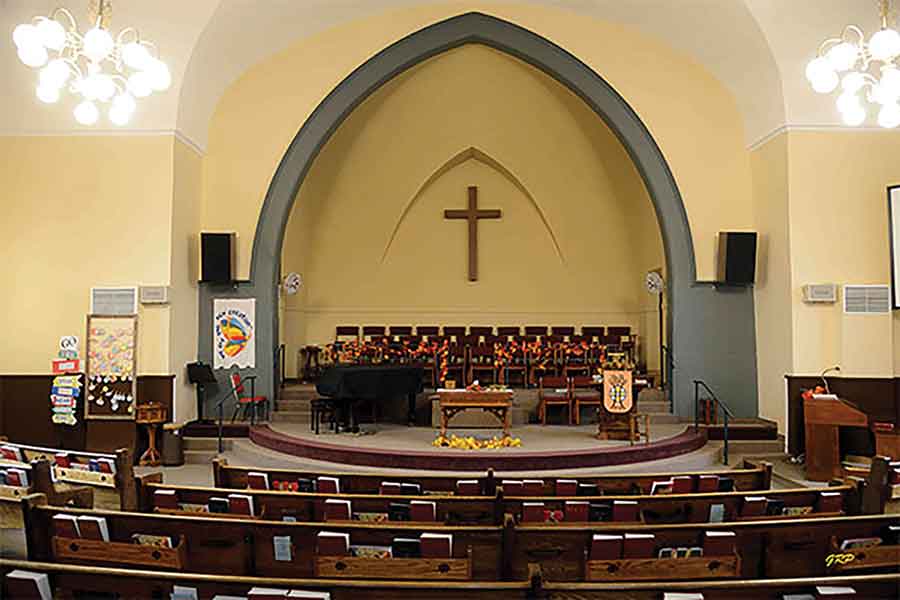
While the United Church of Canada was founded in 1925, the Carman congregation’s building dates back even earlier. The current structure — originally Albert Carman Methodist Church — was completed between 1906 and 1907, replacing a previous church that had burned in 1905. The church was named after Bishop Albert Carman (1833–1917), for whom the town of Carman is also named.
Designed by Winnipeg architect William Fingland, the two-storey brick building is an exceptional example of English Gothic Revival architecture. It features pointed arch windows, brick buttresses, steeply pitched roofs, and ornate towers — including a dominant north tower with a spire and an ornate St. Andrew’s cross. The stained-glass windows, created by Luxfer Prism Co. of Toronto, remain a defining interior feature, along with the church’s excellent acoustics.
Inside, the sanctuary follows a traditional Akron plan with U-shaped pews, a gradually sloped floor leading to the pulpit, and a vaulted ceiling. Much of the original woodwork, transomed vestibule doors, and light fixtures remain intact, and the building retains its historic yellow and brown colour scheme.
The church officially became part of the United Church of Canada in 1925 when its Methodist congregation voted to unite with St. Andrew’s Presbyterian Church and other Protestant denominations across the country. Although the Carman congregations continued to hold separate services for a time, they formally merged in July 1941. The church and its lot were designated a municipal heritage site in 1988.
In a message recognizing the national centennial, Manitoba Lieutenant Governor Anita R. Neville praised the enduring role of churches in communities.
“It is admirable that your church community continues to evolve over time to best address the spiritual needs of your congregants in these challenging times around the world,” said Neville.
Reverend Harold Kenyon, who grew up in Elm Creek and now serves in ministry at Carman United Church, said the building is more than a place of worship — it’s a vital part of the town’s fabric.
“I am very proud to live here and to serve our district and the wider church,” said Kenyon. “Carman has been a wonderful place to raise our family.”
He noted the church has long served as a hub for the community, not only hosting weddings, funerals and baptisms, but also providing ongoing support to those in need.
“Our church has long been a valued community hub providing resources and support to people in crisis and those who are food insecure,” said Kenyon. “We have joined community partners in sponsoring refugees and have been privileged to host a citizenship ceremony. We believe that collaboration and working together is the best way forward.”
Carman United Church is one of more than 2,400 congregations nationwide that make up the United Church of Canada — the country’s largest Protestant denomination. Formed through the merger of Methodist, Congregationalist and many Presbyterian congregations, the national church was created in 1925 as a uniquely Canadian faith body rooted in service, inclusion and progressive ministry. Today, more than one million Canadians still identify with the church.
Located at the corner of 1st Street SW and 3rd Avenue SW, Carman United Church remains a landmark of spiritual and architectural significance — a place where community and history continue to meet.


