Agriculture and Agri-Food Canada recently announced that they will be closing multiple research stations and reducing staff levels across the country, and canola growers are expressing concern about the impacts.
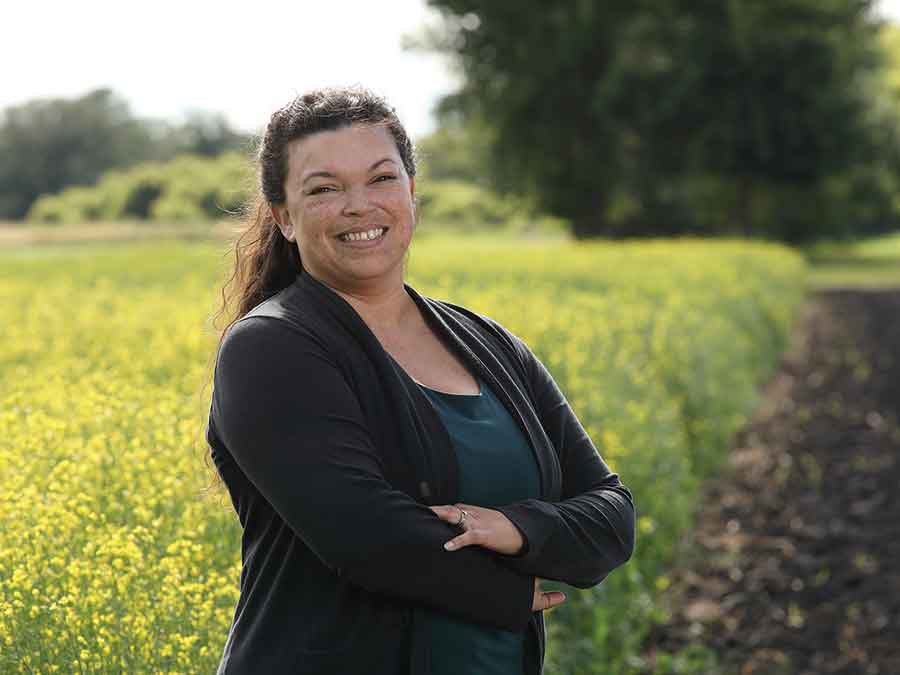
Delaney Ross Burtnack, executive director of the Manitoba Canola Growers Association, said that each research station has its own series of research priorities. As far as they know at this point, the only research station closing in Manitoba is in Portage la Prairie.
“The collective group of locations also worked together as a geographically diverse network to ensure agricultural testing happens in a range of locations and conditions,” she said.
“In Portage, work like early-maturity soybean testing, winter wheat variety adaptation for Manitoba conditions, and operating as a central location for extension and reporting of that work were important functions.”
She outlined some of the possible impacts of these closures.
“Stakeholders across agriculture have met repeatedly since this announcement to try and assess the depth of the impact,” she said.
“Without clarity on how the ongoing research work at affected locations and by affected staff will managed going forward, we can only speculate on the most obvious impacts. These latest cuts compound with ongoing erosion of funding in recent decades to further weaken prairie-wide research capacity.”
This situation risks the integrity of the research network and leaves geographical gaps, she added.
“We are not clear how they will be addressed. Public funding continues to shrink, putting more pressure on farm groups like ours to seek out funding for the research work farmers need,” Ross Burtnack said.
“That work may not be replaced by the private sector or would benefit from long-term continuity and third-party unbiased oversight. In the current trade environment where Canada is seeking to grow and secure its agricultural sector, this is a step in the wrong direction.”
The role of research is essential in the industry.
“Publicly funded research is the foundation of innovation in agriculture,” she said.
“It encompasses so much of the work that happens before a product, crop variety or production technique is commercialized, and much of the work that doesn’t have commercial potential because it’s too small a market or too regional to be of interest to the private sector, for example.”
Across Manitoba, there are about 6,000 canola farms, including 327 in the Interlake region.
“Farmers recognize the value of efficient operations. However, there is real and shared concern across the sector that this decision will cause significant gaps and damage to the agricultural research sector at a time when research and innovation has never been more important,” she said.
“Manitoba Canola Growers Association is working closely with our counterparts across Canada to get clear on the Agriculture and Agri-Food Canada decision and next steps in order to support and protect the research needs of farmers and the industry as a whole.”
Warren Ellis, board chair of the Manitoba Canola Growers Association, has a canola farm based in Wawanesa.
“As a Manitoba farmer, I’m concerned about what these Agriculture and Agri-Food Canada decision staff cuts mean for the future of canola research,” Ellis said.
“Public independent research delivers real value for farmers, and Agriculture and Agri-Food Canada decision researchers and support staff have done tremendous work for our industry over many years. Losing this capacity puts long-term innovation and crop development at risk.”


