As the year 2000 approached, global attention was drawn to the so-called Millennium Bug, commonly referred to as Y2K. The issue was anticipated to have significant consequences for technologically advanced nations, with predictions that core infrastructure might fail — including malfunctions in aircraft and automotive chips, the loss of bank account data and disruptions to everyday household appliances.
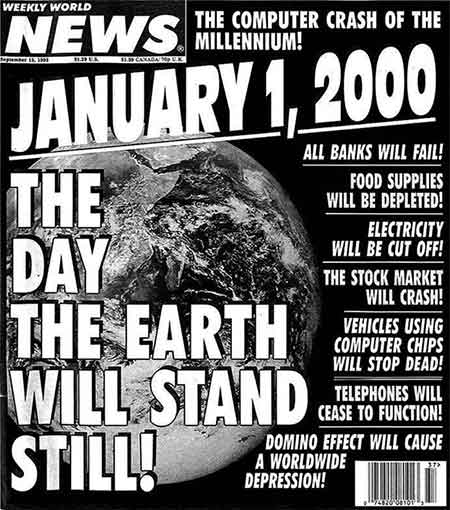
The term “Y2K” described anticipated computer errors related to the formatting and storage of calendar data for dates from the year 2000 onward. Many programs represented four-digit years using only the last two digits (e.g., 1985 as 85), making it difficult to distinguish between the year 2000 and 1900. As a result, there was concern that computer systems’ inability to process dates accurately could jeopardize computer-dependent infrastructure worldwide.
Throughout 1999, media outlets consistently reported on updates, precautionary strategies and potential disaster scenarios. Literature such as Y2K for Dummies aimed to assist the public in navigating these uncertainties, and there were even reports of survival courses and underground shelters being organized.
The Canadian government took considerable measures. Prime Minister Jean Chrétien instructed key cabinet ministers to remain in Ottawa, assembling at 24 Sussex Drive to monitor the situation as midnight approached. Additionally, 13,000 Canadian troops were placed on alert. Locally, the RCMP advised citizens to prepare for possible emergencies, assuring them of continuous policing services.
The RM proactively filled reservoirs at Stephenfield and staffed facilities, including readying generators in case of electrical failure. The Community Hall was designated the Emergency Operations Centre, equipped with a portable generator since permanent backup power had yet to be installed. A detailed advertisement in the Valley Leader outlined comprehensive preventive steps and procedures for utilities, health care, law enforcement and emergency supplies.
Ultimately, the predicted crises associated with Y2K did not materialize on a global scale. Manitoba Hydro reportedly expended $16,000 in preparations but, like local governments, expressed relief at the absence of significant issues.
“Our primary concern was the new water treatment plant, which operated without incident,” stated RM CAO Lind Baleja. “We remained cautious and implemented robust contingency plans.”
Similarly, Town CAO Cheryl Young and hospital director Betty Park confirmed that operations proceeded smoothly.
International incidents on January 1, 2000:
• Japan: Thirteen train stations temporarily ceased dispensing tickets.
• South Korea: Patient intake forms mistakenly recorded a newborn as 100 years old.
• Hong Kong: Breathalyzers and taxi meters failed at midnight.
• Germany: Childcare subsidies were delayed due to payroll system errors.
• Italy: Prisoners’ release dates were erroneously extended by 100 years.
• United Kingdom: An error calculating the ages of 154 pregnant women resulted in incorrect Down syndrome risk assessments.
• United States: More than 3,000 Oregon residents erroneously received jury duty summonses.
• Canada: A daycare inadvertently offered a spot to a woman registered as 105 years old.


