By Dennis Young with notes from Cliff McPherson
Three miles west and south of Roseisle, along the Boyne River, sat a stretch of CPR-owned land marked by steep, rolling hills. Locals were skiing there as early as 1927, long before Canadian National Railways developed the site in the late 1930s and named it Snow Valley.
With the start of the Second World War, the hill closed to the public and was instead used by soldiers who trained on the challenging terrain in white camouflage. After the war, CN resumed control, calling in railroad gangs from nearby communities to build a warm-up lodge and coffee shop, a first-aid post, washrooms, and to shape the slopes. Under the supervision of Frank Roy, crews also made and installed the lifts.
Lloyd Keith, Hugh Clearwater, Del Clearwater and Cliff McPherson operated those early lifts, battling homemade equipment, heavy snowfall and a lack of road access. Reaching Snow Valley meant arriving by ski, horse or train. By the mid-1940s, CN began running regular “ski trains” from Winnipeg on Sundays, including a stop in Carman.
A Dec. 5, 1946, edition of the Dufferin Leader advertised: “Ski train to Snow Valley Sunday morning leaves Winnipeg at 8:45 a.m. and will stop at Carman about 10:15 to take on passengers.” A week later, 20 area residents joined roughly 3,000 Winnipeg skiers for the official opening.
At its peak, as many as 24 coaches arrived at once, pulled by three steam engines and accompanied by dining cars. “I can recall watching the train from the top of the hill,” McPherson said. “It looked just like a snake.” Engines used wooden snowplows to punch through deep drifts—sometimes buckling under the weight.
In the late 1940s, new Department of Labour safety standards brought additional challenges. Tow ropes posed risks, and squirrels routinely chewed through safety-device ropes, requiring weekly repairs.
The hill operated with six stretcher toboggans, one engine and a caboose on standby in case an injured skier needed urgent transport to Carman. A six-member ski patrol, including Chic McIvor, kept watch, while Albert Green served as the resident peace officer.
At its height, Snow Valley was considered one of Manitoba’s finest ski areas. It featured two tow lines and nine runs—among them Ararat (a 2,000-foot run), Hurricane, Suicide and Nosedive. For the less daring, seven miles of snowshoe trails wound through the area.
Snow Valley shut down in 1952-53 and sat idle until 1961, when CNR Carman agent Gordon Baisley reopened the hill with a single lift and equipment rentals. Under Ron Skelton and Kor Kats, the area revived and even hosted summer dances.
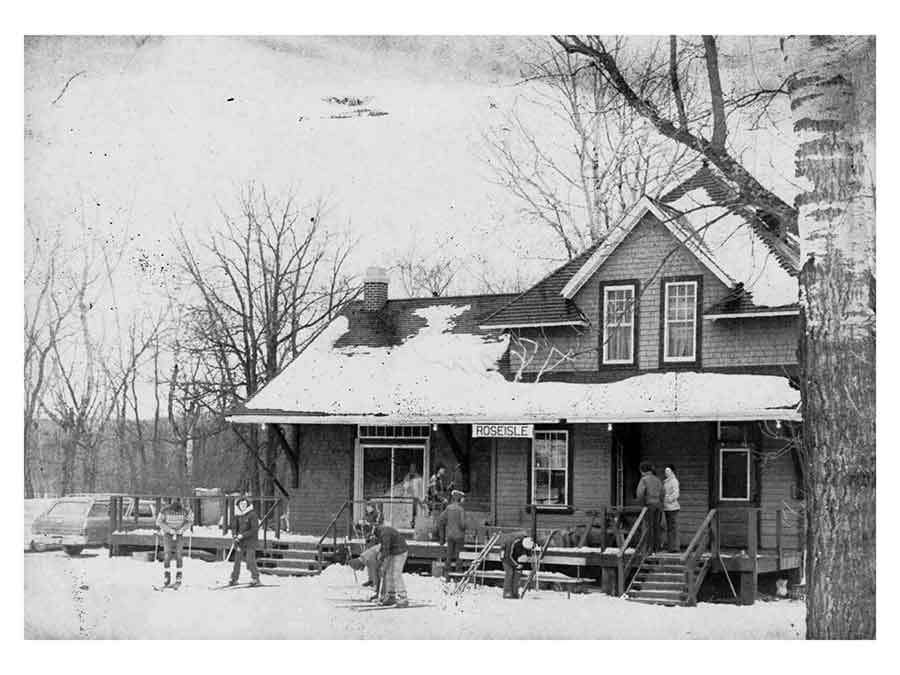
Operations continued intermittently until 1972, when Don and Wynne Leslie took over. They renovated the former Roseisle CNR station into a modern chalet and bought substantial rental equipment. By January 1973, Snow Valley was drawing capacity crowds—even without a liquor permit.
Despite strong potential, the Leslies eventually sold to Ruth DeJong and Wayne Smith in the 1980s. Under their direction, Snow Valley expanded to 12 runs with three lifts—a T-bar, Poma and rope tow—and began hosting major events. The 1986 Freestyle Canadian National Team performed moguls, ballet skiing and aerials in a showcase billed as “The Greatest Show on Snow.” Sunday Nancy Greene lessons drew beginners and families.
But warm weather crippled snowmaking in December 1986, and drought conditions in 1989 left the creek too low to operate the machines. DeJong and Smith closed Snow Valley in August 1989, forcing the 1990 Manitoba Winter Games to relocate skiing events.
After more than 60 years battling weather, equipment and the challenges of running a rural ski hill, Snow Valley ultimately reverted to the private property of Jeff and Joyce Nicolajsen.