As dry spring conditions continue to grip the Eastman and Interlake regions, a growing number of municipalities — including St. Clements, Alexander, Victoria Beach, Fisher, Coldwell and Armstrong — have issued burn bans to curb the heightened risk of wildfires.
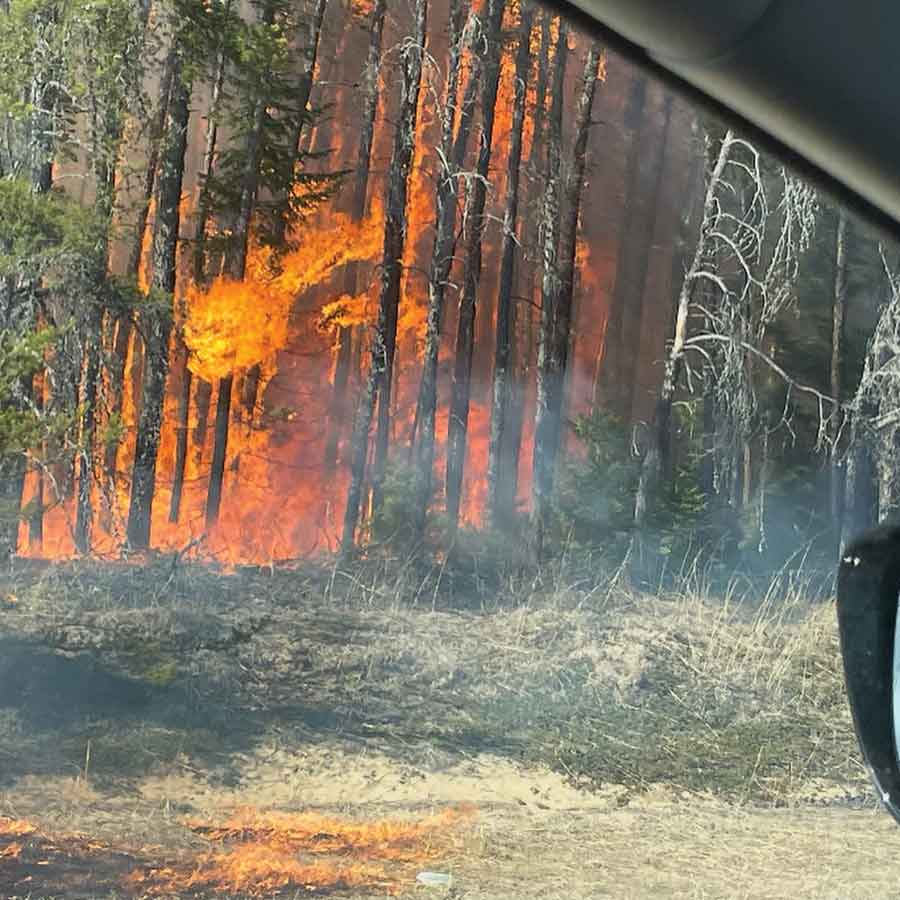
Victoria Beach fire department was battling a fast spreading grass fire in Traverse Bay over the weekend. Traverse Bay residents were evacuated Saturday. Fortunately by nightfall the fire was under control thanks to the water bombers
The RM of Alexander has implemented one of the strictest bans to date. No outdoor fires of any kind are permitted, including fires in approved pits. The discharge of fireworks and sky lanterns is banned, and all motorized backcountry travel — including ATVs and other off-road vehicles — is prohibited until further notice.
The elevated risk became clear over the weekend when the Victoria Beach Fire Department was called to battle a fast-spreading grass fire in Traverse Bay. Residents were evacuated Saturday as the fire advanced, but by nightfall, the blaze was brought under control thanks to the assistance of water bombers.
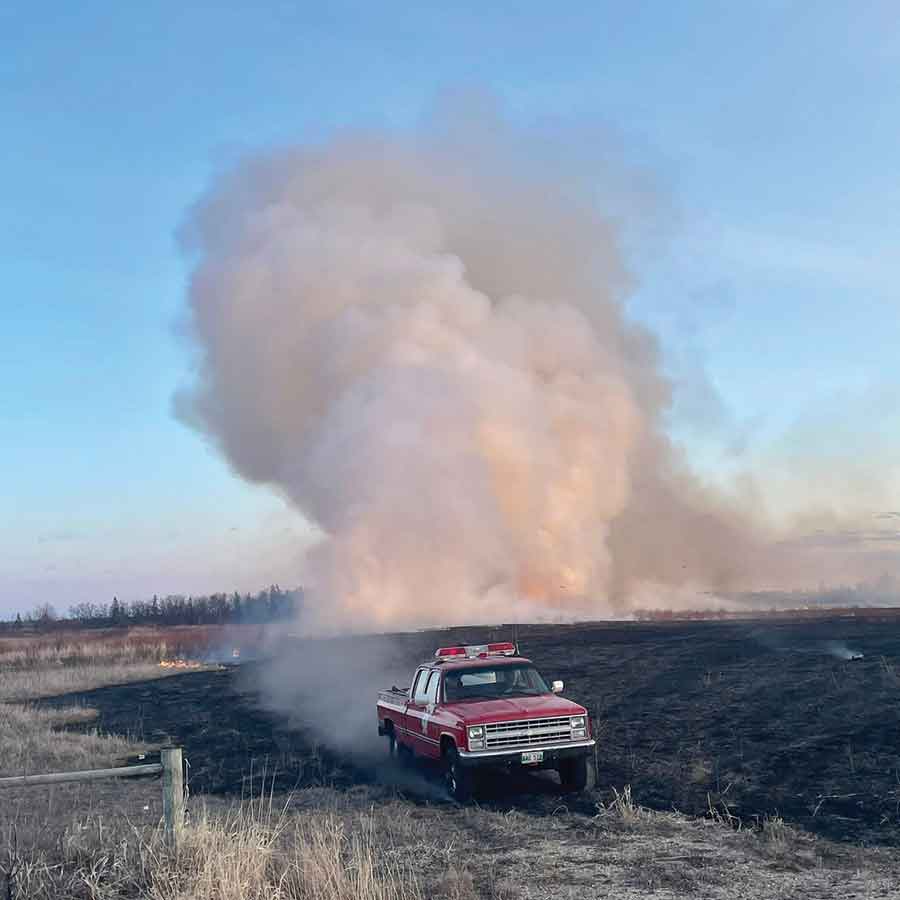
Firefighters from the Riverton-Bifrost Fire Department worked to extinguish a grass fire near Road 134 North and PR 222 on April 23. Crews were able to contain the blaze before it reached a nearby outbuilding
The RM of Victoria Beach will implement a fire ban starting Monday, April 28, 2025.
“This will not impact services in the community; it will provide a safer environment for residents, visitors and our emergency departments and personnel who get called into action when fire events occur,” said Mayor Penny McMorris.
The ban prohibits the use of all off-road vehicles across the municipality and forbids the use of open fires and fire pits. Fireworks are already banned at all times within the RM.
Officials are urging all residents to remain vigilant, noting that even small sparks can lead to fast-moving fires under the current conditions.
The RM of St. Clements has banned all burning until further notice, including backyard fires in approved fire pits, the discharge of fireworks, and burning at transfer stations.
The local restrictions come as Manitoba enters a critical period for wildfire activity. Spring is traditionally one of the most dangerous seasons for wildfires in the province, as dead vegetation from the previous year dries out and becomes highly combustible. Without significant moisture from rain or lingering snowpack, even a small spark can lead to fast-moving fires — especially under windy conditions typical of Manitoba springs.
Human activity is the leading cause of wildfires in the early season, according to provincial wildfire officials.
The Manitoba government reminds all residents that provincial burning permits are required for outdoor fires set within designated burn permit areas between April 1 and Nov. 15 each year. Permits, available from Natural Resources and Indigenous Futures district offices, may be cancelled or restricted on short notice depending on fire danger conditions. However, permits will not be issued in areas where municipal bans are already in place.
Although there are currently no provincewide burn or travel restrictions, officials are encouraging Manitobans to use extreme caution. Travellers and workers are urged to stay on developed trails when venturing into permitted backcountry areas, as off-trail travel can heighten the risk of sparking fires. All-terrain vehicle operators should check for debris around engines and exhausts regularly and are advised to carry a fire extinguisher, axe and shovel at all times.
Burn permit holders are reminded to monitor weather forecasts closely, ensure they have sufficient firefighting equipment on hand, and establish fuel breaks before igniting any fires. Outdoor fires must never be left unattended and must be fully extinguished before leaving the site.
Manitobans are also encouraged to take proactive steps around their properties by undertaking FireSmart activities. FireSmart Canada recommends pruning tree branches within two metres of the ground, removing flammable debris, and maintaining a defensible space around homes to help limit the spread of surface fires.
In a typical year, Manitoba averages around 400 wildfires, burning roughly 200,000 hectares of forest and grassland. Spring fires are often smaller but can be among the most dangerous because of their rapid spread and proximity to communities and infrastructure. The risk typically declines once new green vegetation emerges in late spring or early summer, but early-season vigilance is critical.
For a full list of municipal burning restrictions, visit www.gov.mb.ca/wildfire/burn_conditions.html. For wildfire situation updates and safety information, visit www.gov.mb.ca/wildfire or follow the Manitoba government’s X (formerly Twitter) account at https://twitter.com/mbgov.
To report a wildfire, call 911 or the province’s toll-free TIP line at 1-800-782-0076.


