Gimli-based Evergreen Basic Needs is exploring a new way to provide food to people turning to the food bank as food prices, the cost of housing, household expenses and wages failing to keep up with costs continue to put pressure on area residents.
EBN executive director Karen Bowman said food banks, including EBN, can’t continue to operate under the old models they started out with, and have to find new ways to supply food to those struggling to pay for food.
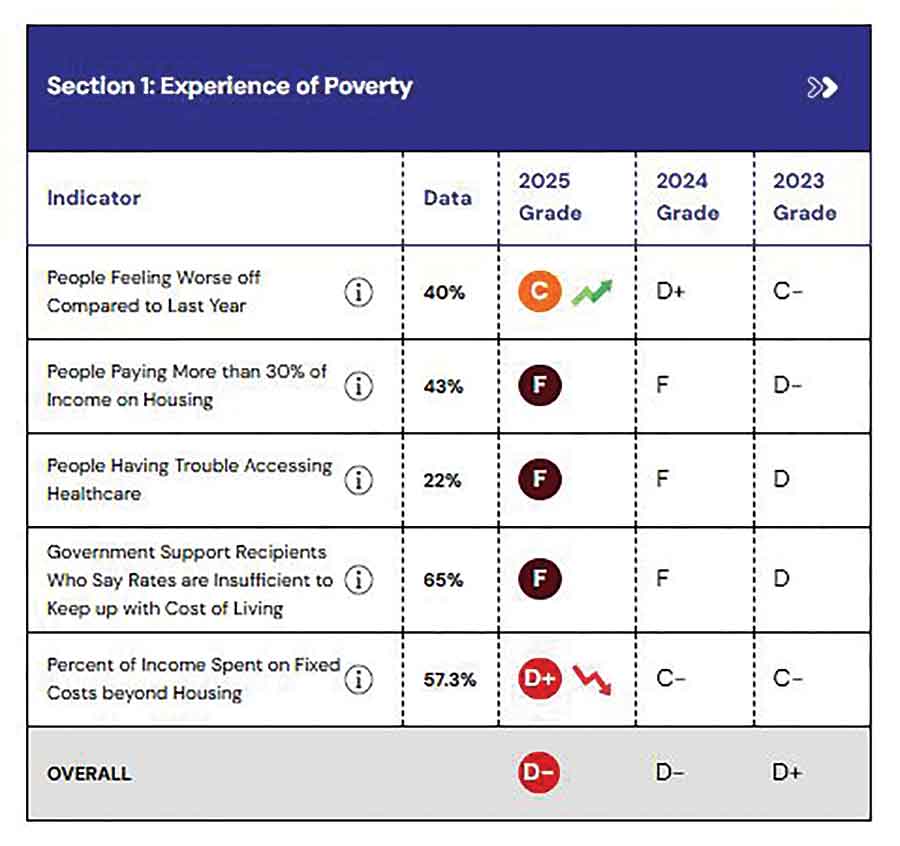
Food Banks Canada’s Poverty Report Card was recently released and she said Canada got a grade of D overall for its support of people experiencing food insecurity
“We’re not doing great in this country. Food Banks Canada’s report focused on the federal level rather than the provincial level because a lot of the innovations that need to happen have to come from a higher level of government. The feds have to get on board. We can’t continue the way we are with the models we have,” said Bowman. “Most of the food banks in and around this area were started 40 years ago out of church basements to support smaller needs. But the needs have grown so beyond our scope and we aren’t set up to deal with that.”
The Poverty Report Card grades the federal government based on a number of factors including people’s experience of poverty, measurements of poverty, a standard of living and the government’s progress on passing anti-poverty legislation. It included assessment on the percentage of income people spend on housing and fixed costs beyond housing. Forty-three per cent of respondents, for instance, said they’re paying more than 30 per cent of their income on housing, which earned the government a grade of F.
In addition to the continuing rise of food prices, housing costs affect how much food – and what type of food – people can afford and whether they’re forced to turn to a food bank for support. Despite the poor report card, Food Banks Canada said the federal government’s announcements on affordable housing, a national housing plan and other initiatives could be “game-changers.”
In the meantime, Bowman said food recovery is one way food banks can pivot to meet the growing demand for food. Food that either passes its expiry date – essentially a marketing tool – but is still fit for human consumption, or food that’s left on the grocery store shelf because people can’t afford it is being thrown into landfills.
In Canada that amounts to about 47 per cent of food being wasted each year that could be eaten, according to Second Harvest, a charitable organization that works with the food industry to redirect surplus food to non-profit organizations in every province and territory.
Throwing food away is exactly what Bowman wants to avoid.
“A very high percentage of food ends up in the landfill because there’s either no one to buy it or there’s no resource that can take it and turn it into something else. So, there’s a bigger push going into reclaiming food and keeping it out of landfills,” said Bowman. “Food that is still acceptable – it still has nutritional value and is fit for human consumption – might need a few modifications. And [food recovery] reduces greenhouse gas emissions. This is not just a food crisis: it’s an environmental crisis as well.”
Bowman is currently engaging local grocery stores on the idea of food recovery and seeing whether they and EBN can enter a partnership.
There are food-recovery partnership programs in place in larger centres. For Gimli and area, a partnership would entail a coordinated team of “businesses, volunteers and other stakeholders,” she said. A system would have to be set up whereby the food bank could respond quickly to a grocery store offering food that will otherwise be discarded. It would also entail EBN staff with food-handling licenses following Health Canada guidelines.
“We’re in the very early stages of chatting with local grocers. This would require manpower because EBN would have to have people sorting through food and seeing what can be reclaimed and repackaged. I don’t know what this looks like exactly because it’s still early days. But we are in conversation,” she said. “There might be food that we can’t reclaim and that could go to area farms for livestock feed rather than end up in the dump.”
EBN is expecting to see another increase in the need for hampers for the upcoming holiday season.


