Golden Prairie Arts Council is celebrating its 30th anniversary in 2026, and part of the excitement includes a variety of visual art exhibitions featuring eight rotating artists throughout the year.
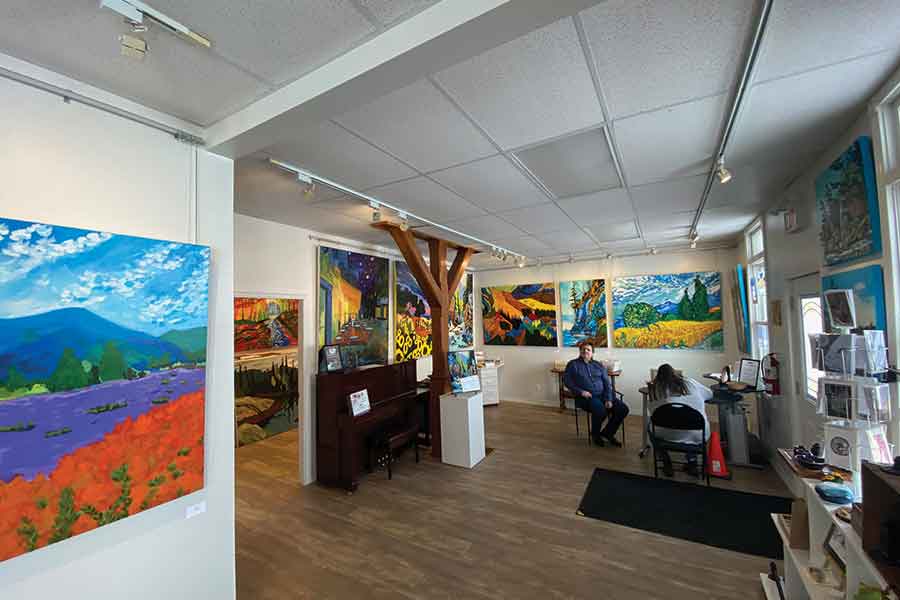
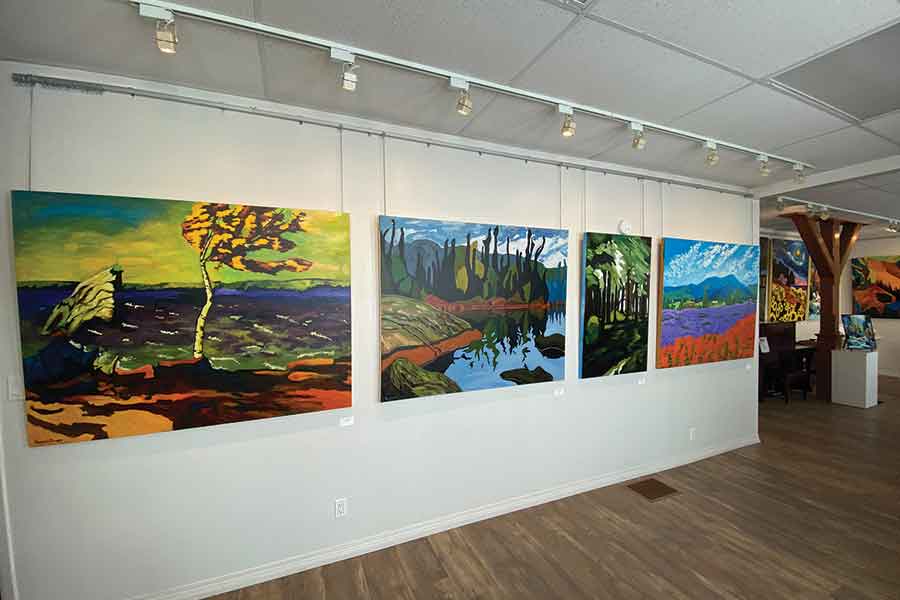
Until the end of March, David Leon Crispo of Elliot Lake, Ont., will have 40 pieces on display. Crispo is primarily a landscape and nature acrylic artist who dove deeper into his passion for painting after becoming deaf in 1999.
“I couldn’t hear, so my jobs were always limited, and most times I was pushed out the door with people saying I didn’t fit in,” he explained. But with painting, he was able to find his place once again.
“I had nothing to lose, so I thought I need to up my game and make big, colourful art.”
Inspired by Monet and the Group of Seven, Crispo said those influences have had an immense impact on his career.
“I remember being in total disbelief at how beautiful these paintings were,” he said, recalling his sixth-grade field trip to a college-level art show. “The emotions that some paintings gave me were life-changing — I knew I wanted to create like them. They had to drag me away because I was hooked.”
Soon after, his mother signed him up for art classes at the college, where he learned a variety of skills — painting, pottery, sculpting and guitar — but painting and guitar stood out as his two favourites.
Putting painting aside for many years to pursue his passion for guitar, he described his creative outlet as becoming “completely lost” once he lost his hearing. He decided there was no better time than now to pick up the paintbrush again. He said painting is an anxiety reliever, allowing him to escape into his own world.
“For a long time, I didn’t share that I was painting again for fear of rejection,” he added. “As word got out and I could see that people liked my art, my confidence grew, and now I want everyone to see it. Painting is a visual art and meant to be shared. I want people to get lost in my paintings as they gaze at them. I want them to feel happy and peaceful inside. In a world full of noise and upheaval, I want them to feel that everything’s going to be okay.”
He said each piece takes an average of two weeks to complete and follows a similar routine each time: prime the canvas with a solid colour to contrast the white, grid the panel to achieve the right perspective, sketch the design and then paint.
“This is the fun part,” he said. “It’s like an addiction.”
Often surprised by how quickly time passes, he enjoys experimenting with colours and techniques to determine what works best. Once satisfied, he applies a clear coat to protect the paint and adds a hanger.
When asked about his favourite painting, he always says it’s the one he’s currently working on.
“This is the type of thing you improve on constantly. Always learning your craft and developing your style,” he said. “It’s a fun process seeing your own style develop.”
He is always willing to learn and strives to consistently improve his skills. He hopes to continue painting for as long as he is able.
“It is true that when you do something you love, it’s never a job — and I love going to work every day.”


