Film screening to take place at the Canadian Museum for Human Rights on Jan. 29
Ervin Chartrand is a Selkirkian, a Métis filmmaker and storyteller, and the director of Gego Mawikak: A Story of Reconciliation. This film will be screened for the very first time at the Canadian Museum for Human Rights in Winnipeg on Jan. 29, and Chartrand welcomes residents to come and view this story.
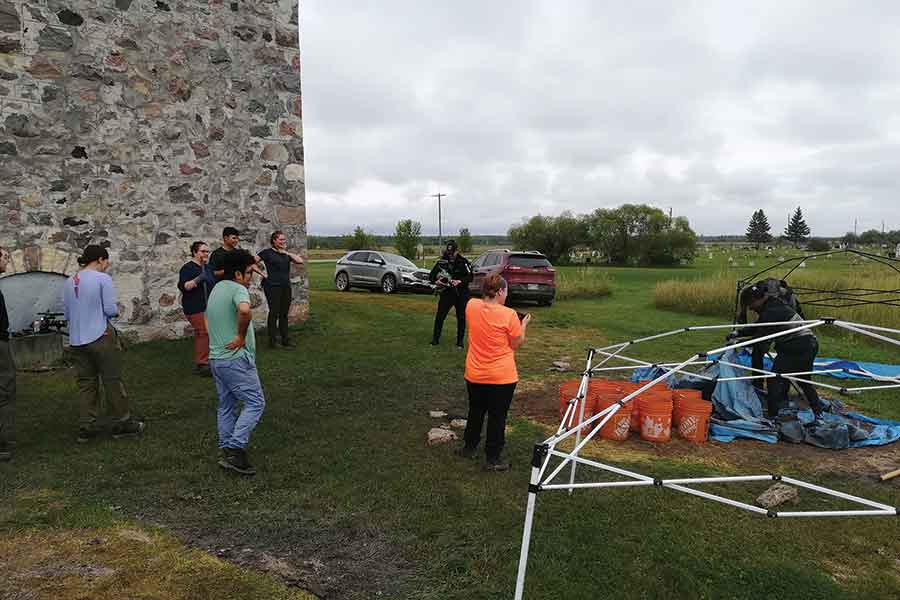
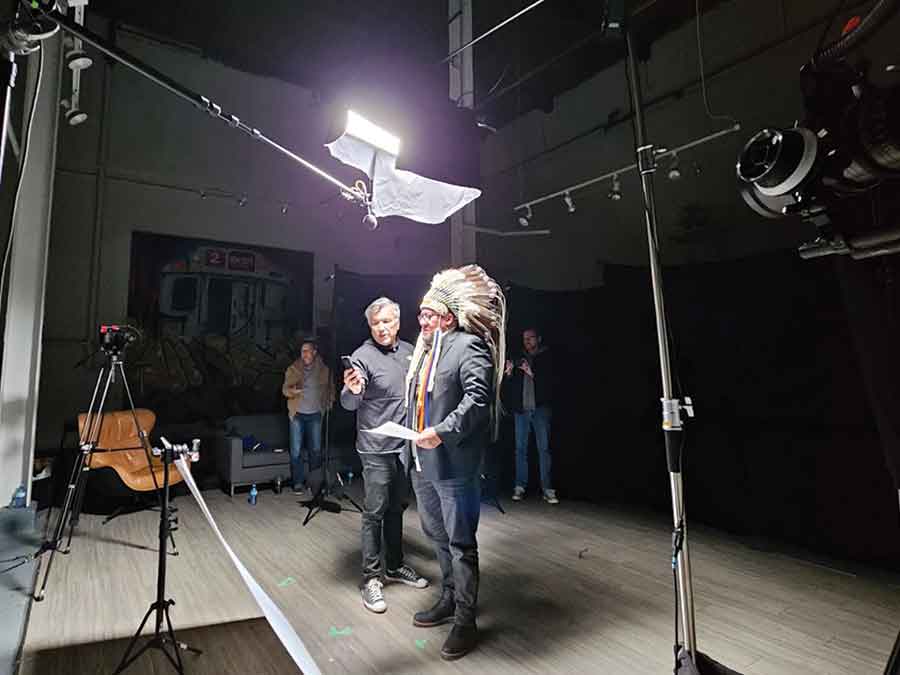
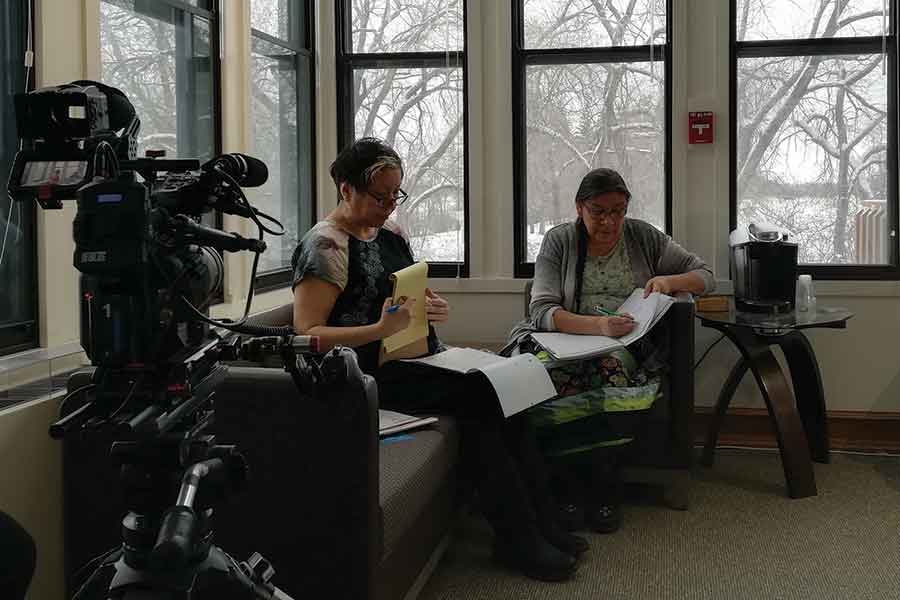
Some shots from Gego Mawikak: A Story of Reconciliation
“The community of Pine Creek First Nation was doing some ground penetrating radar in and around the Catholic Church, which is on the reserve of Pine Creek First Nation. They were for several years, and they did the basement one year, and they found 14, what they call, anomalies in the basement of the church,” said Chartrand.
He was then invited to add this story to one he was already documenting exploring the hard truths of the lived experiences of people and families who attended Pine Creek Indian Residential School, north of Dauphin, Man.
The investigation took place in 2023.
“I think it was for 30 days they were excavating for. We documented the whole (excavation) and did interviews with the anthropologists who were there. We conducted the interviews with the residential school survivors, and the Archbishop of the Catholic Church from the Archdiocese in Winnipeg. The RCMP, the Catholic Church, and the community were all involved in trying to find answers for what was under the church,” he said.
Chartrand personally got involved in the film industry in 2003. He later completed the University of Winnipeg‘s film studies program and became involved in this production when Pine Creek First Nations hired him to direct a documentary about residential school survivors, which expanded to tell the story of the anomalies under the church.
He thinks it’s not just important that these stories are told for the First Nations community but for individuals from these communities now and into the future.
“For myself, my mom was a residential school survivor, right? And it was something that’s really not spoken about in homes, about the residential school, or the abuse that happened within the schools,” said Chartrand.
Chartrand’s own life story involves many twists and turns, and he says that the stories shared by those in the documentary helped him gain his own understanding of his family.
“After hearing the stories from the survivors, I started understanding my mom’s alcoholism, her abuse, the trauma that she suffered in residential school, and how it trickled down to us, like myself, growing up in poverty in Winnipeg,” he said.
He explained that, like himself, there may be others who experience intergenerational trauma but don’t even know where it’s come from.
“I think it’s important to tell stories like this, and to bring that forward to help people understand, not only Indigenous people, but Non-Indigenous people. It sheds light on the stories that exist, and puts that in perspective,” he said.
This film screening is free to attend, though residents are asked to register in advance.
Chartrand explained that once the final story was put together, it was an emotional experience for him.
“I’ve never experienced emotion like this before, and I think it opened something within me that has been sort of pushed down and hidden,” he said.
He explained that part of the deepened emotions for him was due to the film taking several years to come together, as he first started working on the project in 2019.
Chartrand expressed his thanks that it’s now able to be premiered at the Canadian Museum for Human Rights this week.
If you are interested in seeing this documentary, now is the time to do it. After this first screening of the film, it will go on the festival circuit before next steps.
“I’m hoping (people who view Gego Mawikak: A Story of Reconciliation) come out with a more respectful approach not only to Indigenous culture, but the people who went through the residential schools,” he said.
As for Chartrand, the completion of this documentary doesn’t mean that he’s slowing down. He’s currently working on a documentary for the CBC, and when he’s done that, he’s hoping to step away from filmmaking for a while, at least to work on a memoir.
“I think after doing this documentary, it really opened my eyes to myself and also my past,” he said.
If you are at all interested in viewing this documentary, it’s free, and Chartrand encourages you to make the drive.
“I think it’s important for people to see the documentary, Indigenous and Non-Indigenous. It’s a healing film. It’s not something that is very negative. I think it’s more of a film on reconciliation and how community, and people, and organizations come together to try to find answers,” said Chartrand.
To register for the screening or to learn more about Gego Mawikak: A Story of Reconciliation, visit: https://humanrights.ca/event/screening-gego-mawikak-story-reconciliation.


