As part of 115th annual International Women’s Day on March 8, the Record is celebrating women whose work helps people in the Interlake and who’ve made a significant impact in their industry.

Shelley Napier has earned several awards for her emergency management work, including a King Charles III Coronation medal. She works with communities, businesses, organizations, academic institutions and First Nations across Manitoba, Canada, as well as overseas
Shelley Napier is the managing director of Napier Emergency Consulting, teaching people how to prepare for and survive an emergency.
Prior to setting up her consultancy, Napier worked with the Manitoba Emergency Measures Organization before retiring in 2017.
Napier identifies risks, creates emergency plans and provides training for specific emergency situations that can range from floods, severe winter storms, tornados, wildfires, community evacuations and shootings.
Napier has overcome a number of challenges working in a male-dominated industry and has made a name for herself. She is a much sought after expert in her field.
“As a woman in this business, I’ve learned that you’re going to have your challenges. You have to be willing to be strong and have your voice heard, and find a way to make that happen by being respectful, by building a good team and by working together,” said Napier, who has decades of emergency management experience and is a founding member of the annual Manitoba Disaster Management Conference.
“You’ve got to deal with people where they are. It’s not my job to change anyone’s mind. It’s my job to try to educate people and allow them to see how much stronger their community or organization can be if they implement the emergency plans and processes we teach them.”
Napier delivers training to emergency managers across Canada, Indigenous communities, municipalities and other organizations. She works on getting people to the stage at which they can take charge of whatever emergency they happen to find themselves in and execute a carefully considered plan tailored to their unique physical location.
Those plans are very detailed and can include knowing exactly how many cars can fit on a ferry at one time when an island community has to be evacuated, how many boats a lakeside community has that can be used for escape, identifying how much gasoline a community has at one time, identifying muster points or staging areas for evacuation where a head count can be done, identifying escape routes for several thousand people attending festivals such as the Icelandic Festival in Gimli or the Corn and Apple Festival in Morden.
Napier’s consultancy team is made up of professionals with specialized areas of expertise. They’re academics who bring emergency management research and best practices to the table, and practitioners who’ve had their boots on the ground during emergencies – a team Napier calls “pracademics.” The team includes “really strong women.”
“We do phenomenal work. When I look at what we do and what we produce, everything is individually tailored and everything meets the clients’ needs,” said Napier. “We work on emergency topics that no one has really has looked at; there’s not been a lot of work done on those with physical disabilities. And we work with numerous Indigenous communities across Canada, helping them build emergency programs. They’re on the front line, and oftentimes they’re unable to get help quickly if they’re located in remote areas.”
Climate change can be a challenging topic for emergency managers; the trend towards more severe weather events and disasters may not necessarily be viewed by some in the context of global warming.
“We can call it weather that is very different from what it used to be, or we can call it climate change – it doesn’t matter. But I think we have to acknowledge that there are more frequent weather emergencies happening,” said Napier. “We’re having earlier and earlier fires burning. Last year [one of Manitoba’s worst wildfire seasons] was not a one-off. I think we’re going to see that again and again.”
Emergencies in Manitoba may, in the public’s mind, be primarily associated with weather. But Napier said it’s not beyond the realm of possibility to imagine mass shootings here along the lines of that in Tumbler Ridge, B.C., or in Nova Scotia where a gunman disguised himself as an RCMP officer and killed multiple victims.
“I think a lot of the events happening around our country are a wake-up call,” she said.
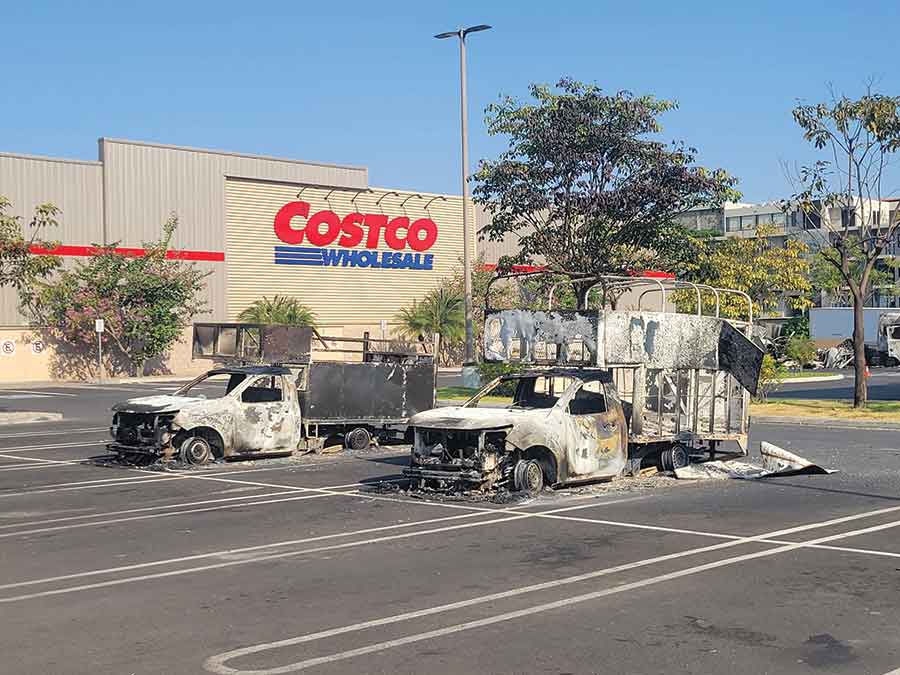
Ironically, Napier found herself in lockdown last month when she was in Puerto Vallarta, Mexico, at the time members of the Jalisco New Generation Cartel staged violent demonstrations in the wake of the government’s capture of their leader, Nemesio Oseguera Cervantes (El Mencho). Mayhem ensued in the streets of the popular tourist destination, with cars and buses commandeered and set on fire, as well as trucks carrying petrol. Oxxo convenience stores and Pemex gas stations were destroyed.
Looking at the riot and its aftermath from the perspective of an emergency manager, Napier said communication from the top could have been much better. She struggled to understand instructions in Spanish to not leave her unit and had to use Google Translate.
“I think a proactive approach would have had [emergency alerts in] multiple languages so visitors could understand what was going on. That can reduce fear and start to calm people,” said Napier. “This was new for Puerto Vallarta. And there was a lot of AI-generated information that was not accurate.”
Europe is a good example where public messages are relayed in multiple languages, she said.
She has worked with the Canadian International Development Agency overseas managing emergencies, with NATO, and in countries such as the Czech Republic, Austria, Hungary, Ukraine and in Asia.
“One of the things I recognized early on in my international work was how grateful I am to be Canadian because we do emergency management really well at home,” she said. “We don’t have a top-down system in Canada: we have a bottom-up system that’s driven from a municipal level where a timely awareness of what’s happening can help avoid damages.”
In addition to training municipal and community leaders how to handle various events, Napier said it’s important to also “build public education” whereby people become more aware of how they can prepare and help themselves should an emergency arise. That messaging should be delivered frequently to the point where it really sinks in.
“What can you do to prepare yourself? You can prepare a go bag of essential items. You can identify neighbours who might need help. You can implement a buddy system in your neighbourhood. You can’t expect a council in a small municipality with few resources and staff to be able to do everything,” said Napier. “We need to start implementing better public education. That could be handouts reminding people when we’re in fire season. People should know access and exit points. Make this so common that it starts to sink in.”
She heard stories from last year’s wildfires that people didn’t know they had to evacuate because they were in an area with no cell towers, she said. But they should have been given enough public messaging beforehand to make them aware of risks during fire season and to know how to get out.
“Maybe you want to have a satellite phone. You want to have your ID, medication, important documents and change of clothing in a go bag,” she said. “If this message is delivered every fire season, it becomes muscle memory.”
Part of emergency planning in communities can include identifying volunteers to be part of a response team, holding town halls where emergency planning is publicly discussed or arranging presentations from emergency management experts.
Napier said she tries to make emergency preparedness training fun for communities, and some of the tools she uses are games such as “Hazard Bingo” with emergency supplies as prizes.
“We try to make it so that the public is excited to try to build a safe community,” she said. “That happens through knowledge-sharing and from backing from a municipal council.”
Napier said the training uptake from councils has been “amazing.” She cited The RM of Grahamdale and Victoria Beach – which is a peninsula surrounded by boreal forest – as being “so tuned in” to emergency planning and what sorts of programs they can implement to reduce the risk of fire damage.
And she has emergency exercises planned this month with the RM of Armstrong.
In addition to in-person emergency management training, Napier offers monthly online workshops through her website. Called LearnEM Academy, the workshops are hosted by emergency management practitioners from across Canada.
Napier said she absolutely loves her job and the rewards it brings.
“This has never been work for me. I love what I do. I love the people I work with. I learn something new from each client. And I’ve made so many friends across the country,” said Napier. “I feel very honoured to be given a chance to help somebody build an emergency management program for themselves. It’s never been monetary for me; we do some pro bono work in certain situations. If it’s going to save a life, I will help. I will help as long as I possibly can.”