Oak Point a midge-magnet this year
It’s usually massive floods, cottage-lifting projects and outhouse-burnings that keep residents and cottagers in Lake Manitoba communities along the south basin occupied. But this year, it’s midges.
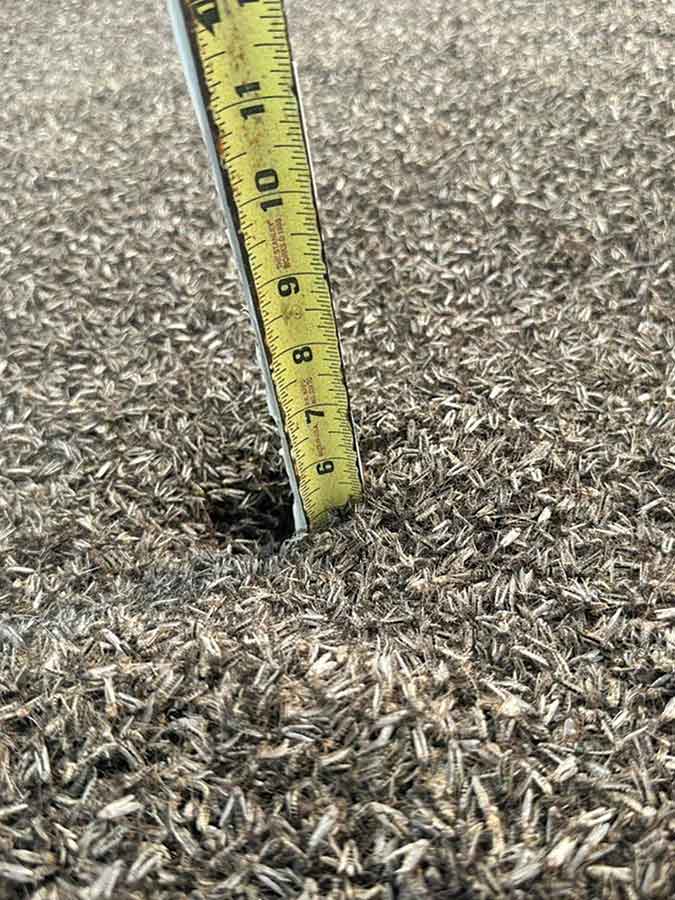
Ankle-deep piles of midges
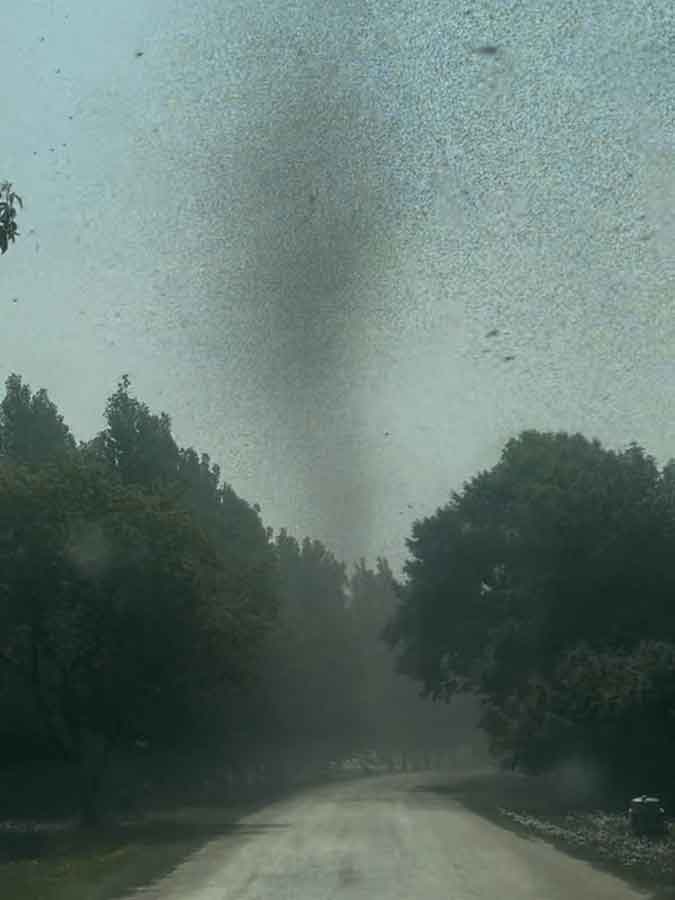
And it was like a scene out of the Bible – but without the wrath and destruction behind it – when millions of non-biting midges made some communities their temporary stomping ground over the past few weeks.
Non-biting midges are the doppelgangers of mosquitoes, but they don’t have elongated piercing proboscis. Lucky for us.
The mighty midge spectacle occurs every few years or so on Lake Manitoba, and can easily outdo the show that fish flies (or burrowing mayflies) put on for residents on Lake Winnipeg.
This year’s midge phenomenon had some Oak Point residents firing up a small front-end loader to clear ankle-high piles of sludgy midges from the road.
“I’ve lived at the beach for 31 years and I do not ever recall them this bad. We have had some doozies, but not like this,” said Derek Johnson, who’s accustomed to dealing with some pretty big messes in his job as Interlake-Gimli MLA. “They’ve piled up under the street light to the point where I’ve had to spread them around to prevent the maggots from setting in.”
The terns, the swallows, the red-winged blackbirds and countless other lakeside aviators love the midges. The frogs love them. The fish love them. But maggots? Apparently so.
Johnson shared a do-not-eat-while-you-watch-this video of pearly white squirming maggots or “regular fly larvae” gorging themselves on midges past their best before date. You could see the maggots turning over themselves as they mouth-hooked their way through foot-deep heaps of midges. If you don’t want to think about what happens to bodies committed to the earth, un-know the preceding sentence.
Reports from up and down the lake indicated that Oak Point was a midge-magnet this year. Johnson said Silver Bay (near Moosehorn) was reporting a minimal number of midges. Ditto for Lundar Bay. And a person he spoke with in Laurentia Beach, south of Oak Point, said they recall the midges being worse in 2018.
Nevertheless, there were lots of midges.
“Last week, people had to pull over [on Highway 6] to clean their windshields when they hit a swarm that smeared the glass and blurred their view,” said Johnson.
There are over 1,300 species of midges in Canada. Some bite. Of that 1,300, there are about 800 species of midges that don’t bite, according to the Canadian Encyclopedia. The non-biting midge larvae are primarily aquatic and burrow into the mud of lakes and other waterbodies. They emerge in late spring and early summer.
Life is awfully short for adult midges – roughly a few days to a week. They emerge from the lake bottom and swim through the murk towards the light. To the casual observer, they seem to be giddy with the newness of the airy world above the water and all the stuff on which they can cling such as rocks, trees, roads, homes, cottages, vehicles and people. After a full day buzzing around and soaking up the sun – and perhaps intuitively sensing the accelerated brevity of their time on earth – they act like unsupervised teenagers at sundown, slipping away from their parents’ cottage with a two-four to meet up with their friends in the bush.
Midge meet-ups in the evenings – great airborne assemblies that resemble twisters – are for the sole purpose of mating, says the encyclopedia.
“My wife and I were driving back from Stonewall, and we were looking across the fields towards the marsh and could see funnels clouds of the little beggars,” said Jack King, who lives in Twin Lakes Beach, about 22 kilometres south of Oak Point.
The Kings forgot to turn off their exterior motion-detector lights one evening last week and paid for it the following morning.
“It’s unbelievable. There were piles of them. We forgot to turn off the lights and we’ve had to shovel them out twice now,” he said. “I haven’t seen them this bad.”
With a little rain, piles of mushy dead midges could pose a slipping hazard, he said. But at worst, the flies are only a nuisance to humans. They’re a great food source for the other creatures that inhabit the shoreline of Lake Manitoba.
“The fish love them. It’s usually towards dusk that you see big carp rolling over in the water, grasping at them,” said King. “And during the day, you see the smaller fish and the pickerel and the perch jumping for them.”
New residents who just moved to Twin expressed their concern about the “bugs” on a community Facebook page, he said. They were wondering if anyone else had them in their yard.
“We reassured them that like kidney stones, this too shall pass,” said King.