A special exhibit is on display in Stonewall to share the stories of the town’s sacrifices during the Second World War.
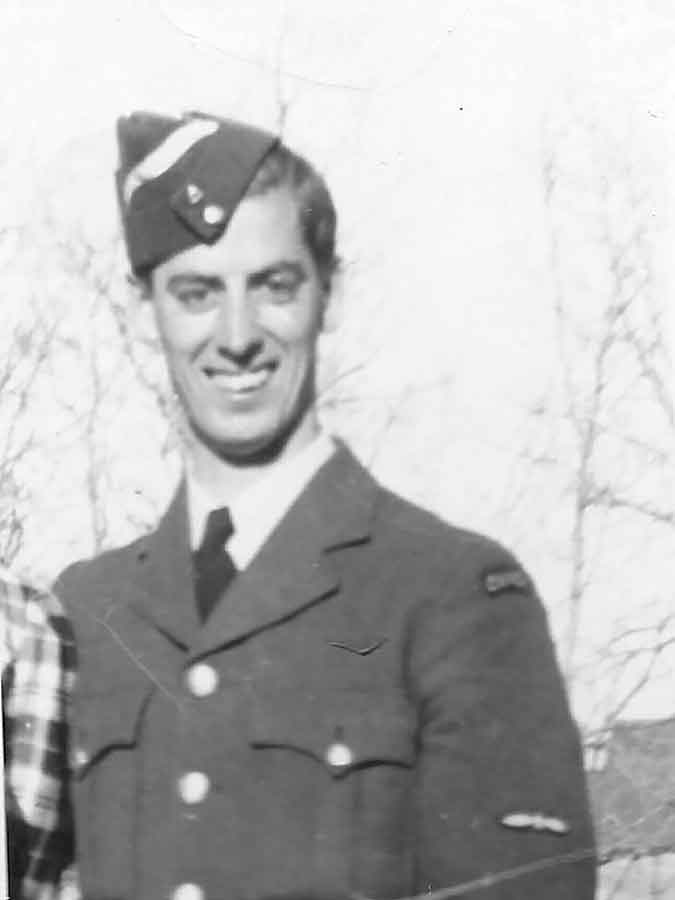
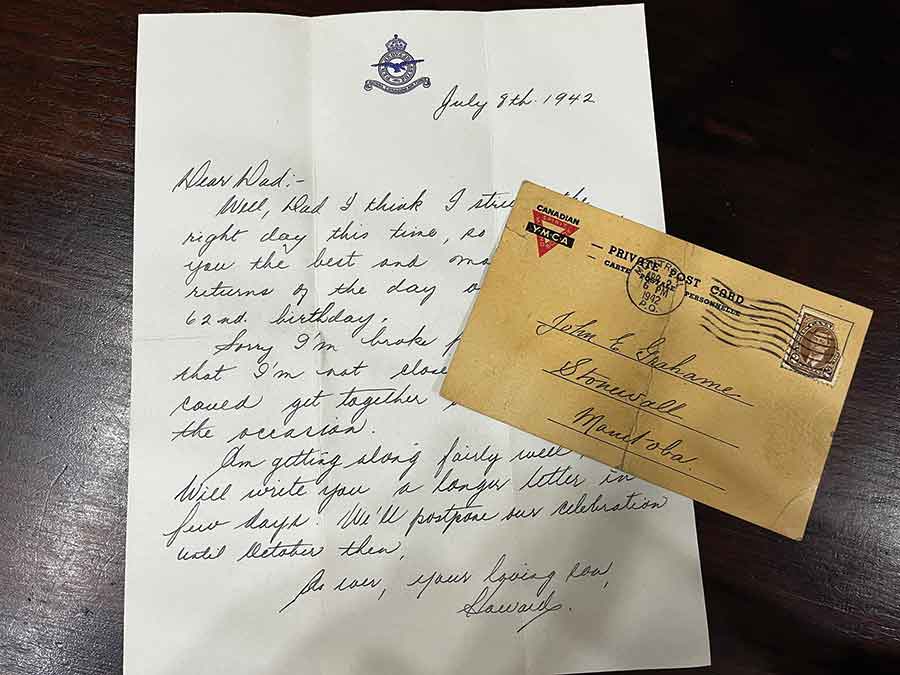
A handwritten letter from John Howard Grahame to his father in 1942 is among the personal artifacts featured in A Small Town’s Sacrifices: Stonewall in World War II. Grahame, a Stonewall native who served overseas during the Second World War. His letter, along with his medals and diary loaned by family, helps bring local wartime stories to life at the Heritage Arts Centre exhibit
A Small Town’s Sacrifices: Stonewall in World War II is on display in the Fullbrook Room at the Heritage Arts Centre from Nov. 1 to 10 from 11 a.m. to 5 p.m. The display will be closed on Nov. 11.
Catherine Precourt of the Stonewall Heritage Committee said the exhibit shows how the Second World War impacted everyone in the community.
“Stonewall had a population of maybe 1,000 people at the start of the Second World War and the RM had probably around 5,200 people, so there weren’t a lot of people in the area. We’re looking at a small rural town and its contribution during the war, how it affected the town and the people in it — not just those who served but the people who stayed here as well,” she said.
“It affected absolutely every single person, including children. So part of the exhibit talks about the people at home, kids at school, what it was like to be in Stonewall with the fundraising drives and the salvage operations and the rationing. It affected every aspect of life at home.”
This year marks 80 years since the end of the Second World War, and Precourt said it’s important to continue to tell the stories so they’re not forgotten. And as the Heritage Committee researched local veterans, they found that the connections extended beyond just names on a page.
“It became personal. These are our boys. These are our people,” she said. “When you read about war or see war movies, we almost become desensitized. We might not stop to think about the personal cost and the personal stories. Those are the ones that mean the most to me.”
This year’s event poster features a photo of an aircrew that didn’t make it home, including John Howard Graham from Stonewall. When his niece saw the photo on the poster, she contacted the Heritage Committee and loaned them Graham’s medals and a wartime diary that he kept.
“Even though it’s been 80 years, it’s still close to the heart of people who lost friends and family. So when people share things like that with us, we’re very grateful. We want to tell the stories of people who didn’t come home but also stories of those that did because it’s all part of the bigger picture,” Precourt said.
“The Heritage Committee is also grateful to the town because they allow us to have space in the building and they fund the cost of supplies for our project.”
Another story in this year’s exhibit focuses on a young couple that was married during the war. They had their first baby right before the husband, who was a Winnipeg Grenadier, was sent to Hong Kong. He was captured and put in prisoner-of-war camp, and wife didn’t hear from him for four years. She went to help on her family’s farm in the Stonewall area until her husband eventually made it back home.
“There so many sacrifices,” Precourt said. “We want to try to give people an idea of what Stonewall was like 80 years ago. This is our past, our heritage, and it’s important to share.”
The Heritage Committee has invited local Grade 6 students to tour the exhibit, and they’ll also be making votives for a service at the cemetery.
“It’s important to involve young people so they have the chance to participate as well,” Precourt said.
“Everything has a story — and these stories are impactful to share.”