News of Chuck Lefley’s sudden passing on Jan. 26, 2026, following a short stay at St. Boniface Hospital, landed with a quiet heaviness across rinks, farmyards and coffee shops alike. He was 76.
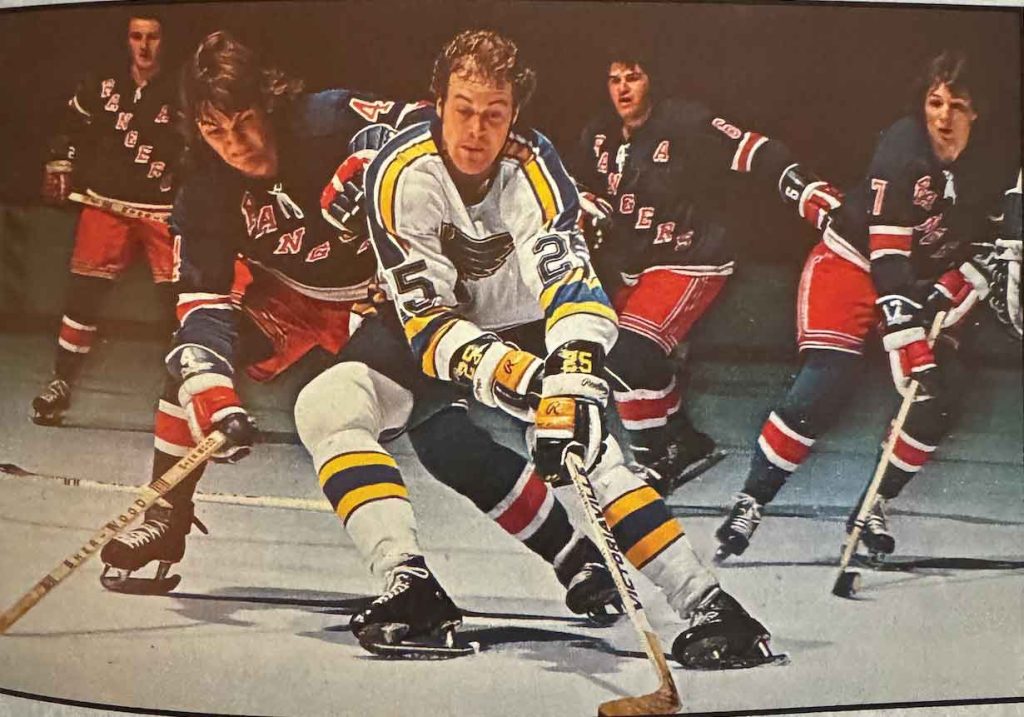
To the hockey world, he will forever be a two-time Stanley Cup champion — a sixth-overall NHL draft pick who wore the sweater of the Montreal Canadiens during one of the most dominant eras the game has ever known, and later posted a 43-goal season with the St. Louis Blues.
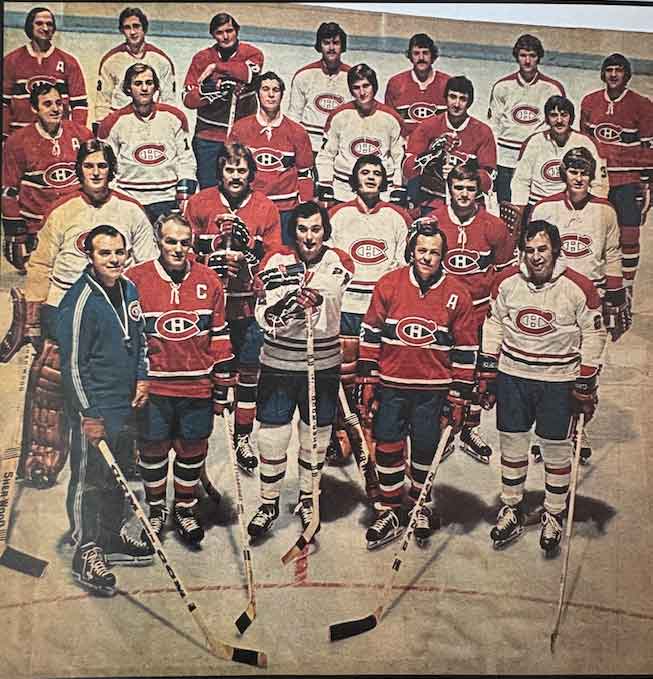
Montreal Canadiens’ Chuck Lefley, second row, second from left, celebrated a Stanley Cup victory during the early 1970s
To Manitoba, he was something even rarer: a world-class athlete who never forgot the gravel roads, outdoor rinks and values that shaped him — and who chose, again and again, to come home.
Born in Winnipeg and raised on a family farm just outside Grosse Isle, Lefley grew up as one of seven children to Bob and Jean Lefley. Hockey came early, and it came honestly. Saturdays meant long drives with his father into Winnipeg’s north end for Tom Thumb Hockey at the old Olympic Arena, followed by years skating on the Grosse Isle outdoor rink and Warren’s indoor rink after it opened in 1957.
By 15, Lefley was already skating with the Winnipeg Rangers of the Manitoba Junior Hockey League, following his older brother Bryan into the program. Tall at six-foot-one and still filling out at barely 145 pounds, he was protected on the ice by some of the league’s toughest players. More importantly, he was learning how teams worked — and how to belong.
His talent was evident early. Lefley was named the Manitoba Junior Hockey League’s rookie of the year in 1966 and helped his team capture the Turnbull Cup that same season.
That lesson would matter. Again and again.
Before most players his age had chosen a junior team, Lefley had already seen opportunity pulled away through no fault of his own. A scholarship to Denver University vanished after false claims of professionalism. A potential path with the newly formed Winnipeg Jets was rejected on principle.
Instead, Lefley skated wherever he was allowed — senior hockey in Warren, minor teams, anywhere ice was available — until an invitation arrived that changed everything: Canada’s men’s national team.
At just 18, he represented his country at the 1969 world championships in Sweden, an experience he would later describe as life-altering, even if he didn’t fully grasp it at the time. When Canada withdrew from the 1970 worlds amid an eligibility dispute and the national team disbanded, Lefley once again found himself without a place to play.
That uncertainty led him briefly — and memorably — to the Brandon Wheat Kings.
In February 1970, Lefley joined the Wheat Kings amid a swirl of telegrams, reversed rulings and late-night phone calls. He produced 12 points in seven games, earned the respect of his teammates, and then — just as suddenly — was ruled ineligible once more. Brandon would be swept in the playoffs. Lefley watched from the sidelines, bewildered but unbittered.
“I never would have thought I should or would make any kind of stir,” he said years later. “Why would you do something like that over me? That’s silly.”
Within months, the same young man deemed ineligible in junior hockey would hear his name called sixth overall at the 1970 NHL Draft.
If fate had nudged Lefley sideways for years, it finally placed him exactly where he needed to be.
Drafted by Montreal, Lefley entered a dressing room that read like a hockey encyclopedia: Jean Béliveau, Yvan Cournoyer, Henri Richard, Serge Savard, Guy Lapointe — and a rookie goaltender named Ken Dryden. A neat footnote in his NHL journey came early: Lefley’s first NHL game was played in Detroit — against Gordie Howe.
He spent much of his early professional career learning in the American Hockey League with the Montreal Voyageurs, absorbing what it meant to be a Canadien. That development paid off in 1972, when Lefley helped the Voyageurs capture the Calder Cup, recording seven goals and seven assists in 15 playoff games.
On May 18, 1971 — just 14 months after being declared ineligible in Brandon — Lefley became a Stanley Cup champion when Montreal defeated Chicago in seven games. He also saw playoff action during that run, dressing for Game 6 of the opening round.
By 1972-73, he had earned his place full-time in Montreal. Lefley posted 66 points in 65 games and, on May 10, 1973, lifted the Stanley Cup for a second time.
In hindsight, the arc of Lefley’s early professional career was remarkable. In a span of three seasons, he won the Stanley Cup in 1971, the Calder Cup in 1972 and another Stanley Cup in 1973 — a rare trifecta that reflected both patience and perseverance.
“I thought wearing the Canadian sweater was the ultimate,” he once said. “I can only liken it to winning a Stanley Cup with a Canadiens sweater on.”
Traded to St. Louis in 1974, Lefley found offensive freedom. His 85-point season in 1975-76 — including 43 goals — remains the finest statistical year of his NHL career. He finished with 292 points in 407 NHL games, a resumé any player would cherish.
But Lefley had already begun thinking beyond the rink.
After stints in Finland and Germany — including time alongside a young Jari Kurri — and one final return to the Blues, Lefley stepped away from professional hockey for good. There was no drama, no regret.
He had a farm waiting.
Back in Grosse Isle, Lefley partnered with his brother Glen to run the family farm, growing wheat, canola and soybeans. He married Sandy in 1982, became a devoted father to Sarah, a father-in-law to Chris and a proud grandfather to Kit and Wren.
Hockey never left him — he coached, organized, fundraised, skated twice a week and helped bring a new arena to Warren — but it no longer defined him. It was simply part of a full life.
After returning home, Lefley also remained deeply committed to helping young people in his community, including his work with the Bryan Lefley Scholarship, which supports students pursuing post-secondary education.
That life was recognized formally with inductions into the Manitoba Hockey Hall of Fame (1986), the Manitoba Sports Hall of Fame (2014), and the Manitoba Baseball Hall of Fame in 2012 as a member of the Grosse Isle Blue Jays. The honours moved him deeply, though he never sought them.
Humility, hard work, integrity and character — the values of a farm kid — remained his compass.
Perhaps the most remarkable thing about Chuck Lefley’s story is not the Cups or the goals, but the way his career unfolded. Time and again, doors closed. Each time, another opened — often wider, often better.
He credited the people around him: coaches, managers, teammates and family who taught him that obstacles were not endings, just turns in the road.
In October 2025, months before his passing, Lefley visited Toronto with his family and saw his name on the Stanley Cup once more. He sat in a replica Canadiens dressing room without thinking — exactly where he belonged.
Chuck Lefley filled rooms with stories and warmth, whether the setting was the Forum, the Manex Arena or a kitchen table in Grosse Isle. He lived a life that balanced greatness with groundedness, ambition with gratitude.
And in the end, the boy who kept being told he couldn’t play found a way to play everywhere that mattered — and to leave the game, and his community, better than he found them.


