The Interlake-Eastern Regional Health Authority (IERHA) released its five-year strategic plan last month, focusing on an overall commitment to improve health-care services.

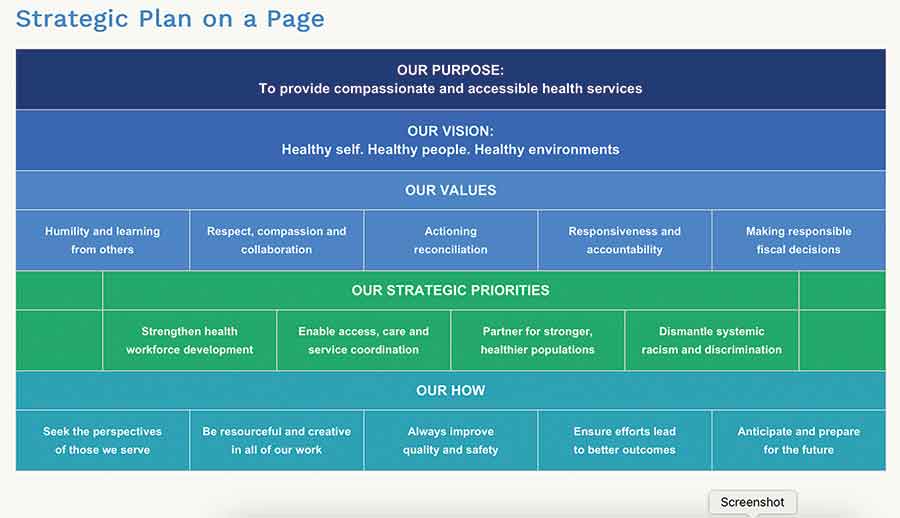
The Interlake-Eastern Regional Health Authority posted its 2025-2030 strategic plan on its website in November, outlining four strategic priorities to improve health-care delivery in the region
The 2025-2030 plan was adopted by the IERHA’s board of directors in March and posted on the RHA’s website on Nov. 6.
In a statement accompanying the plan, board chair Michele Polinuk and CEO Marion Ellis said the plan is “realistic,” will provide a “clear focus” and a “commitment to improvement.”
“This plan is not about reaching for unachievable new goals,” Polinuk and Ellis said in the Nov. 6 post. “Rather, the plan is about focusing our efforts on key areas and initiatives that will strengthen health services and coordination across our region and beyond.”
The IERHA provides health-care services to about 137,000 people across the vast region, which extends from the east shore of Lake Manitoba to the Ontario border. IERHA has over 200 acute care beds, 747 long-term care beds, and provides emergency services, surgery, home care services, palliative care and mental health and addictions care.
The strategic plan has four key areas of focus.
The first area focuses on strengthening the health-care workforce. It will include enhancing education and training to enable recruitment efforts for high demand positions, partnering with local schools and universities to attract future staff, addressing organizational culture that may hinder retention and job satisfaction, providing opportunities for professional development, developing an inclusive workforce and bolstering workplace safety.
The IERHA faces ongoing human-resource shortages in health professions, settings and communities, and recruitment and retention “remain difficult,” particularly in rural and northern areas, states the plan.
Hospital ERs in the Interlake and eastern halves of the health authority continue to shut down temporarily when there are not enough doctors to staff them. Teulon hospital’s ER has been permanently closed for several years, and Arborg’s hospital ER is also permanently closed after experiencing intermittent service in 2023.
The IERHA posts its hospital ER schedules online and provides a phone number that patients can call to see whether an ER is available. The Dec. 1-15 schedule shows either continuing temporary ER closures or reduced hours of ER availability in communities such as Ashern, Eriksdale, Stonewall, Pine Falls, Pinawa and Beausejour.
A Dec. 8 post from the Canadian Medical Association says access to primary care in Canada is “slowly improving,” but 5.9 million Canadians still lack access to a family doctor, nurse practitioner or primary care team, according to a survey CMA and a Toronto physician-researcher carried out.
The federal government announced on Dec. 8 it will “fast-track” foreign doctors through a new express entry program for those already working in Canada temporarily and provide extra spaces in the Provincial Nominee Program.
The IERHA’s second strategic focus is to enable access, care and service coordination as aging populations and higher illness burdens exceed the capacity of some programs.
The IERHA will continue to review strategies to decrease ER and other service wait times, increase access to primary care, mental health and addictions services, involve patients and families in the decision-making process, conduct assessments of care processes and patient outcomes, and allow employees to use their French-language skills and interpreter services to enhance patient care.
The health authority’s third area of focus is on creating healthier populations by addressing inequities and health-care gaps where outcomes vary. That will entail creating plans and solutions to improve access to services and access to preventive and screening services. The IERHA will also address isolation and loneliness among seniors and improve monitoring of the health-care system to inform programs that will address disparities.
The fourth area of focus is on dismantling systemic racism and discrimination to deliver culturally safe care and support a multicultural workforce. It will include promoting the dismantling of structures that contribute to discrimination, promoting cultural safety, respecting all background, implementing training programs on Indigenous cultures, histories, values and traditions, inviting feedback and improving French-language services.
As it developed the strategic plan, the board of directors took into consideration “continuous feedback” from team members, patients, regional representatives, leadership and the board itself. It also collected feedback via staff town halls and regional leadership meetings, strategic focus partner surveys, patient partner interviews, leadership and board meetings, drop-in elected official meetings and information sharing at partner/community meetings.
As the health authority implements its strategic plan over the next five years, it will monitor its progress and success.
The Tribune tried to arrange an interview with the IERHA’s CEO.