Students from across Southern Manitoba gathered in Altona last week for a hands-on conference aimed at strengthening communication skills and inspiring youth-led action in their home communities.
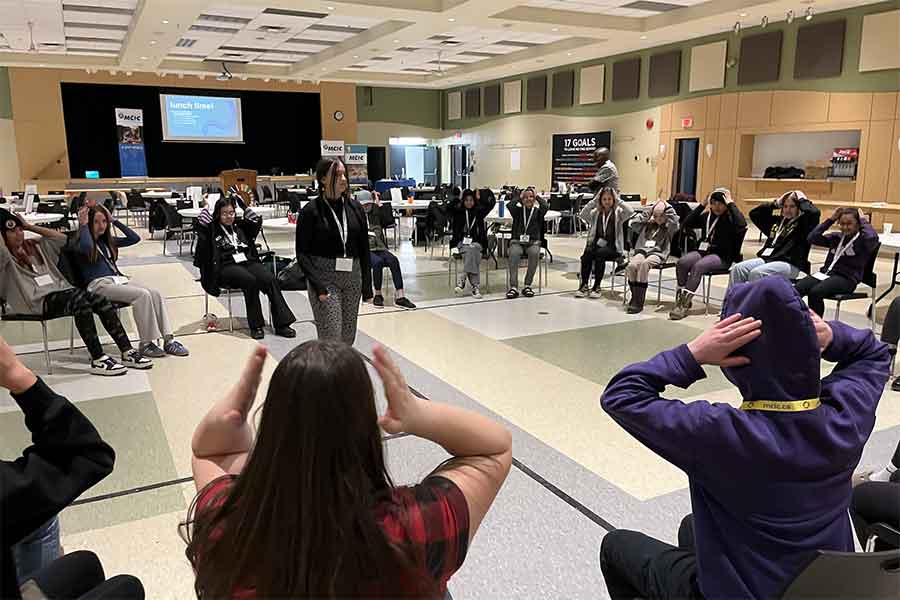
The Generating Momentum for Our World Youth Conference, organized by the Manitoba Council for International Cooperation (MCIC), brought together participants from schools within Borderland School Division and beyond. This year’s theme centred on communication and peace-building.
“We do this work in schools across Manitoba,” said James Kornelson, MCIC’s director of engagement and learning. “Borderland School Division has a mandate to promote sustainability across the division, so we’ve partnered with them to put on this conference.”
The day began with an interactive simulation designed to explore barriers to communication and sources of conflict. Participants were seated at tables representing different “boats,” tied to the guiding phrase, “We’re not all in the same boat, but we’re all in the same storm.”
“There are a lot of barriers to communication, sources of conflict, polarization,” Kornelson said. “We have to face those challenges and we need skills to do that.”
During the activity, students moved between stations collecting “treasures.”
Success earned tokens, while challenges resulted in “anchors” symbolizing obstacles that can weigh down communication. The game-like format encouraged reflection on privilege, difference, and collaboration.
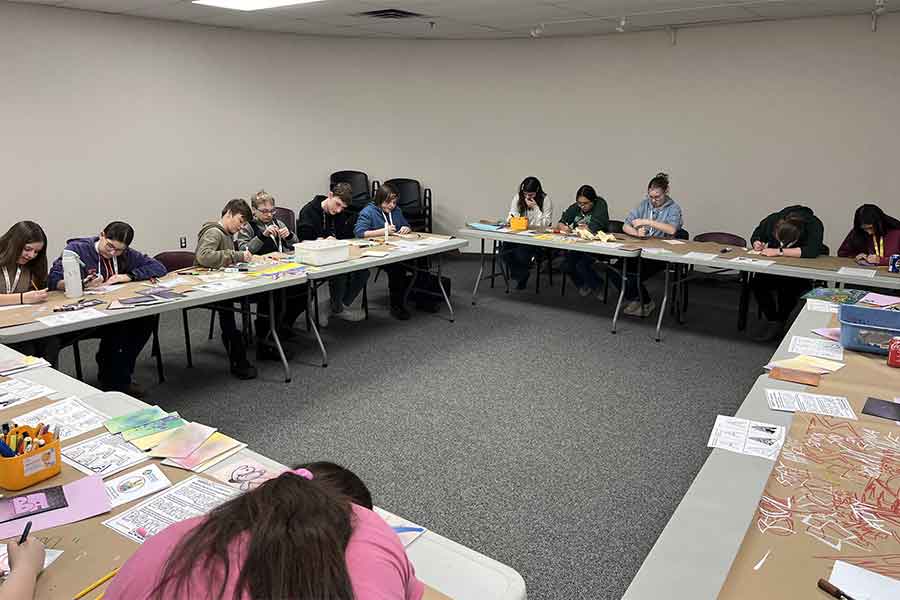
In the afternoon, students rotated through creative workshops in spoken word poetry, theatre, visual arts, and multimedia. The goal was to equip them with practical tools they can bring back to their schools to launch community initiatives.
“Each year we develop new resources and materials for students connecting to the sustainable development goals,” said Bea Basaran, MCIC’s education specialist. “This year we’re focused on communication and peace-building … how we use communication skills to work towards actions for peace.”
Basaran said the conference responds directly to concerns raised about misinformation, digital media, and growing polarization.
“With so much information and digital media, communication is really important, especially for students in this day and age,” she said. “We want to inspire students to take action in their communities to foster inclusive, sustainable peace.”
She added that conferences like this are increasingly vital.
“With disinformation, AI, deepfakes … and reports showing rising radicalization among youth … these are big issues,” Basaran said. “At the core, we’re teaching students to respect each other, to listen to each other, and to understand different forms of communication. That’s foundational to democracy.”
Students said the interactive approach made complex topics more accessible.
Schevchenko School student Alexis Mattson described the conference as an opportunity “to get our brains working and bring something back to our school and create an action project based on the theme of the day.”
Izzy Lebreton, a Gr. 10 student from Ross L. Gray School, observed that proper communication is an essential skill in 2026.
“The world is built on language and relationships,” she said. “If you don’t have communication, you’re kind of lost.”
Others pointed out the overwhelming amount of information young people encounter daily.
“One of the things we learned about today is miscommunication and misinformation, especially on social media,” said Eden Lepp, a Gr. 8 student from Elm Creek School. “It’s important that we dig deeper before taking something as true.”
Students shared strategies such as checking multiple sources and identifying reliable information.
“Knowing who you can trust and what a reliable source is, is a really important skill to have,” Lepp added.
Beyond media literacy, many students said they hope to strengthen personal confidence.
“I would like to take away better communication skills, especially with people with different needs,” Mattson said. “I want to learn how to communicate on different levels with a whole bunch of different people.”
Others spoke about pushing beyond social anxiety.
“Learning how to talk without freaking out,” said Alice Rogers, a student from Roseau Valley School, drawing nods from her peers. “Even just being exposed, it can help you.”
Several schools plan to develop action plans based on the day’s learning. One group hopes to address low student involvement by building school spirit through new initiatives and competitions.
“Everything we learn here, we bring back,” Lepp said. “Just passing on what we’ve learned and setting an example.”
For organizers, that ripple effect is the ultimate goal.
“The whole idea is to go back to your community and do some kind of initiative,” Kornelson said. “Now that you’ve had some training and some creative ideas, take that momentum and build something that lasts.”