As the world marks the 80th anniversary of D-Day — the pivotal Allied invasion that began the liberation of Nazi-occupied Europe — Canadians also reflect on the lesser-known sacrifices made across other fronts of the Second World War. From the beaches of Normandy to the hills of Hong Kong, nearly 1.1 million Canadians served in uniform. Their stories span continents, and their legacies endure in the memories of families and communities across the country.
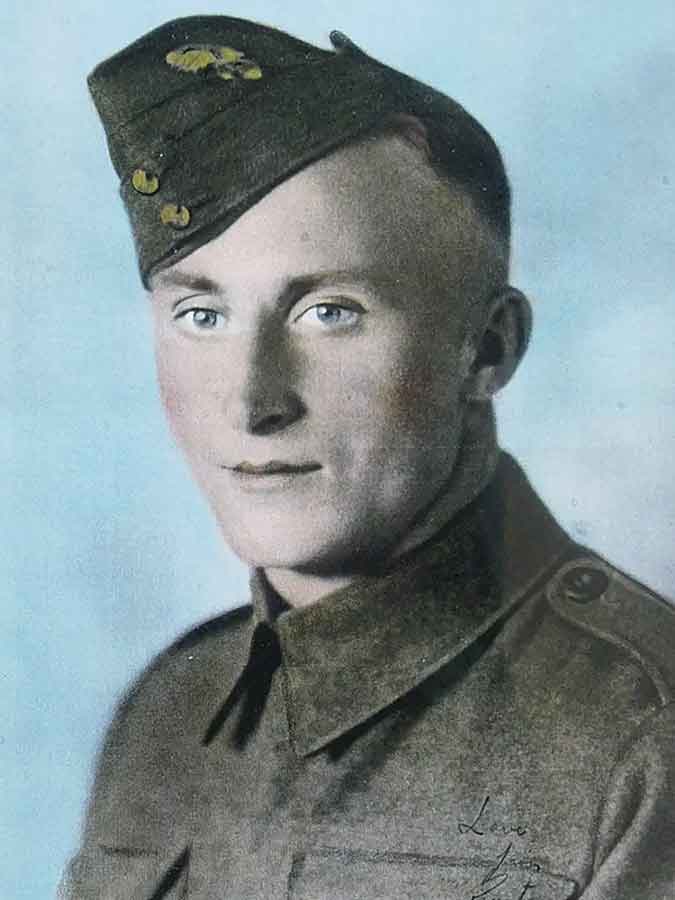
In 1941, the Canadian government dispatched 1,975 soldiers to Hong Kong to reinforce the city’s garrison against an impending attack by the Japanese Imperial Army near the start of the Second World War.
That attack took place on Dec. 7, 1941, resulting in the deaths of 290 Canadians and wounding 483 more. The survivors became prisoners of war (POWs), held by a brutal and indifferent enemy. Among them were several young men from Pilot Mound, including three Agerbak brothers.
Originally from Odense, Denmark, the Agerbak family emigrated to Manitoba in 1927 and settled in the Pilot Mound area. The brothers — Borge, Tage and Knud — were in their 20s when they volunteered to help the war effort. Despite having lived in Canada for only about a decade, they felt compelled to serve their new country.
“Their dad served in the First World War in the Danish army, so it was kind of passed on to them — wanting to be in the service,” said Carol Hadley, daughter of Borge Agerbak. “These guys were all volunteers, as there wasn’t conscription in Canada. During the Depression, jobs weren’t available. This was a regular paying job, and they were sent out on garrison duty. They weren’t fully trained, but they felt it was their duty. My dad always had that belief. I remember when I was younger, he wanted us to vote — said it was our privilege. I didn’t even know he was a veteran until high school, as he didn’t talk about it.”
The brothers joined the Winnipeg Grenadiers and, after brief training, were deployed across the Pacific Ocean. The unit arrived in Hong Kong in November 1941 to support British forces. For a few short weeks, the soldiers enjoyed exploring the city and taking in rickshaw rides.
Everything changed on Dec. 8, when Japan attacked Pearl Harbor. A simultaneous surprise assault occurred in Hong Kong.
Outnumbered and under-equipped, the Allied forces fought for 17 days. Their roughly 15,000 troops were no match for more than 30,000 Japanese soldiers. Hong Kong fell on Christmas Day, with an estimated 2,113 Allied and 675 Japanese soldiers killed.
Tage Agerbak was critically injured on Dec. 20 in an explosion while defending a pillbox. He and several other wounded soldiers were left behind during the retreat and were never seen again.
Fellow Winnipeg Grenadier and POW Wallace Childs later recounted, “Agerbak was dead in the shack when we left with the Japanese. Over 100 of us were jammed into the shack. Our own mortars saw the Japanese around it and dropped five bombs on us. About 35 walked out afterward.”
Roughly 10,000 Allied soldiers who survived the battle were taken as prisoners of war. They were forced to work in shipyards and mines under horrific conditions — starved, tortured and deprived of medical care.
“They always made light of the treatment they got,” said Hadley. “Despite how sick they were and how little food they had. The Japanese didn’t believe in the Geneva Convention and treated the prisoners horribly.”
At least 12 men from Pilot Mound served in Hong Kong: Guy Stewart, Jack Fordyce, Jack Hay, Bill Mayne, Ed Toews, Buzz Winram, Dick Currie, Ed Currie, Keith Stewart and the three Agerbaks. The Winnipeg Grenadiers drew nearly all the able-bodied young men from the town, which then had a population of only a few hundred.
Keith Stewart was the brother of Hockey Hall of Famer Jack “Black Jack” Stewart, while Guy Stewart was his cousin.
“I almost enlisted with the gang when the war broke out,” said Jack Stewart during the war, while his brother was a POW. “Almost every boy in town joined up in 1939. Keith left his wife and three children behind. Guy is married, too, and has a young son. All the boys I went to school with put on uniforms. But the family — Keith and Guy — urged me to stay in hockey. They liked the idea of having a National Hockey League player in the family. They said, ‘It’s easy to get a few soldiers in the family, but it isn’t every day we can have a hockey big leaguer. You’ve got the right idea if you stay with the Red Wings.’”
Although Tage died in the fall of Hong Kong, both Borge and Knud survived more than three years of captivity and returned home at the end of the war. Borge weighed only 100 pounds — down from his usual 180 — a dramatic and tragic indication of the toll the ordeal had taken on every surviving POW.
Both brothers would go on to live long lives, dying in 2001. Borge and his wife regularly returned to Hong Kong every five years to honour Tage, visiting the Sai Wan Cemetery where his name is memorialized. In 2000, Hadley and her brother accompanied their father and his fellow veterans to revisit the place they once saw through younger eyes.
The last surviving Winnipeg Grenadier, George Peterson, died a few years ago at the age of 100. He was a member of the fabled Arden Seven — a group of friends and brothers from St. Vital’s Arden Avenue who all fought in Hong Kong and survived captivity.
The Hong Kong Veterans Commemorative Association (HKVCA) will hold an 80th anniversary event in Ottawa from Aug. 14 to 17, 2025, to mark the end of the Second World War.
On Aug. 15, 1945, the 1,418 surviving Canadian POWs were released after three years and eight months of captivity. The date is recognized globally as Victory over Japan Day (V-J Day), and the 2025 event will honour their legacy and the memory of the 557 Canadians who died in battle or in captivity.
“Our intent is to recognize them in a significant way and to commemorate the deaths of their 557 fellow soldiers who died during the Battle of Hong Kong or during their captivity as POWs,” said Hadley, who now serves as Prairie regional director for the HKVCA. “Theirs is a legacy Canadians should not forget.”
The Ottawa event will include:
• A solemn ceremony at the Hong Kong Veterans Memorial Wall
• Education sessions, including one at the Canadian War Museum featuring a Hong Kong historian
• Story-sharing among descendants of veterans
• A special focus on the more than 100 Indigenous soldiers who served in Hong Kong
• A gala banquet with period-specific entertainment and a prominent Canadian guest speaker
“Our association is a registered charity and has extremely limited financial resources,” Hadley added. “We rely on the generosity of Canadian businesses and individuals to support our educational work, including the 80th anniversary of V-J Day.”
More information on how to donate or get involved is available at hkvca.ca.