The Miami Museum is open again for another season, but it was a bit more special when people gathered last Saturday.
Volunteers and supporters were celebrating the completion of some work having been done on the building as well as the addition of a few new exhibits to the collection.
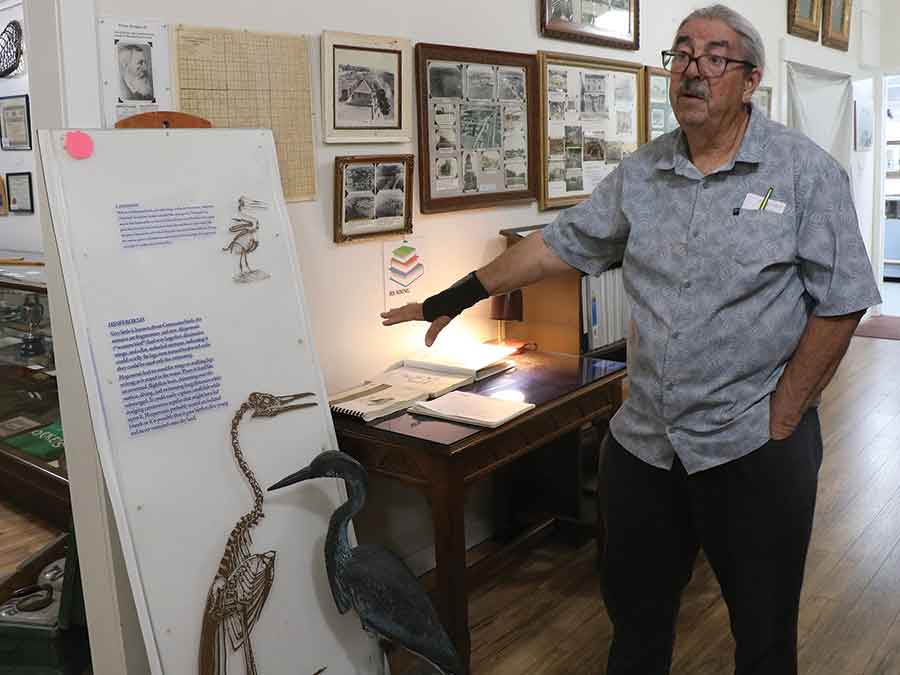
Miami Museum president Joe Brown with some of the fossil exhibits on display
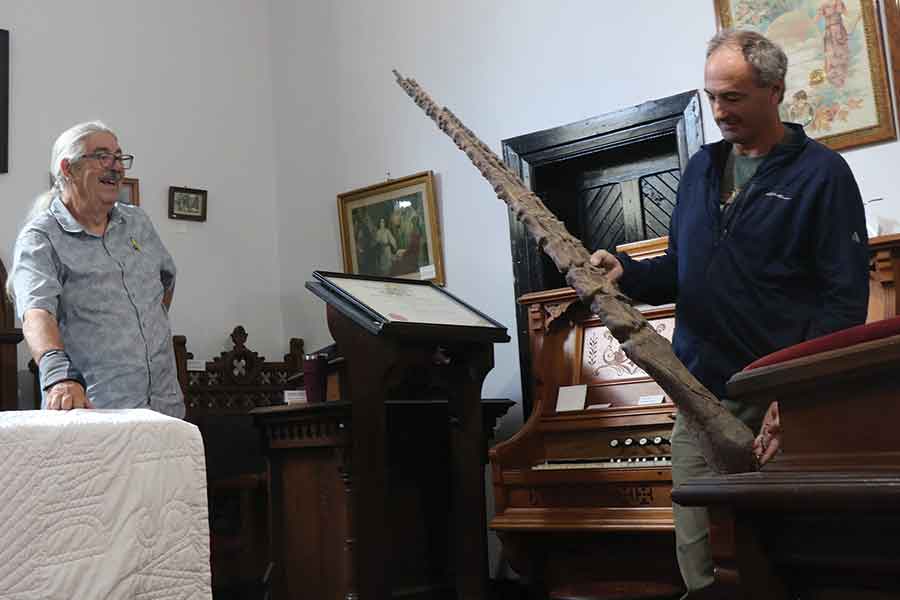
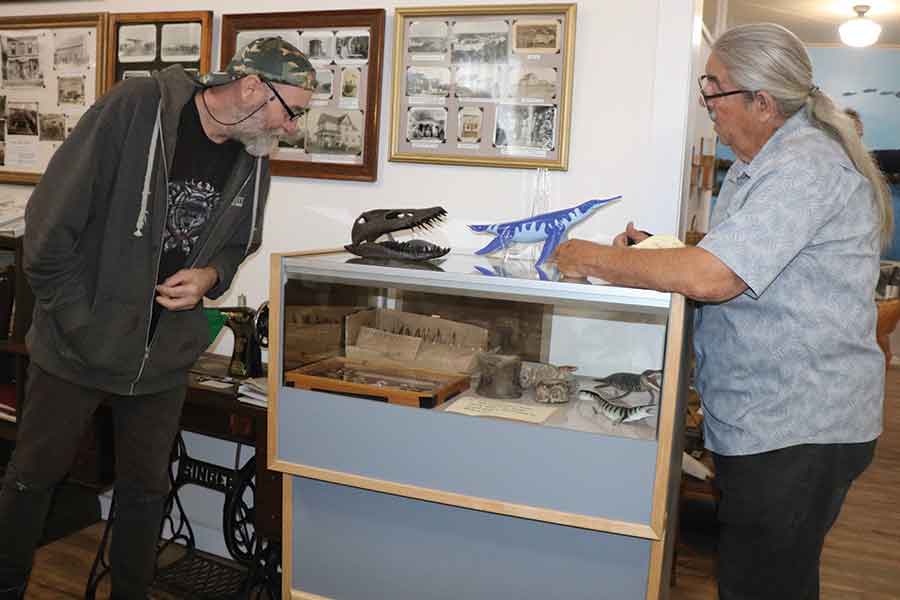
“We opened a bit earlier, but we were doing it by schedule because we just had the church portion of the museum painted, so we had to wait for it to dry. We had all of the displays down and then we had to reinstall them, so we’re calling it the grand reopening, because we’ve got a few new exhibits as well,” explained museum president Joe Brown.
He firstly thanked their main sponsors: the RM of Thompson and the Miami Area Foundation.
“They provide ongoing funding for us but also special funding for projects, and that includes the installation of a computer system that we now are using and also the painting of the church portion of the building that was just done in the last couple years, so we’re celebrating that.”
Brown also highlighted a few new fossil exhibits, and he saluted their relationship with the Canadian Fossil Discovery Centre, which was represented at the opening by executive director Adolfo Cuetara.
“With the discovery of a lot of fossils in the bentonite mines, there was a desire to include some of the fossils on display here, so there was an expansion from the original church building with the addition of a school building,” Brown noted. “We’ve had a lot of interest in fossils in the community, and the Canadian Fossil Discovery Centre collection is based largely on fossils from the RM of Thompson. We had no way of preserving a large number, so that’s where they ended up.”
Brown reflected on the importance of maintaining and preserving the history of the area.
“It takes a fair amount of investment because of the age of the buildings. For example, the church that we’re in now, it was built in the early 1900s. It served its function as an Anglican church until the early 1960s when it was retired. A farmer bought it and was going to move it to his farm but decided, in the context of the community’s interest, to basically donate it to the community to be used as a museum.”
The fossils are a big signature attraction, but the many other artifacts are equally as important.
“What we have are the things that were important to people in their daily lives,” Brown said of the collection, which also includes materials connected to the locals who served in the First and Second World Wars as well as items belonging to the community’s pioneer families.
“We didn’t really get into the fossil thing as a museum until the ‘70s, but we’ve got a great deal of historical material here, and we’re trying to improve community access to it,” Brown said. “In that regard, we’ve developed a digitized database for the collection, which includes photographs that haven’t been posted online yet because we’re only funded enough to get that going last year. We’ve got almost 3,000 artifacts identified.”
The museum, located at the corner of Cole St. and Kerby Ave., is open Wednesday through to Sunday from 10 a.m. to 4 p.m.