A local initiative aimed at fostering understanding between Indigenous and non-Indigenous residents will continue beyond its initial seven-week program after participants described the experience as both educational and meaningful.
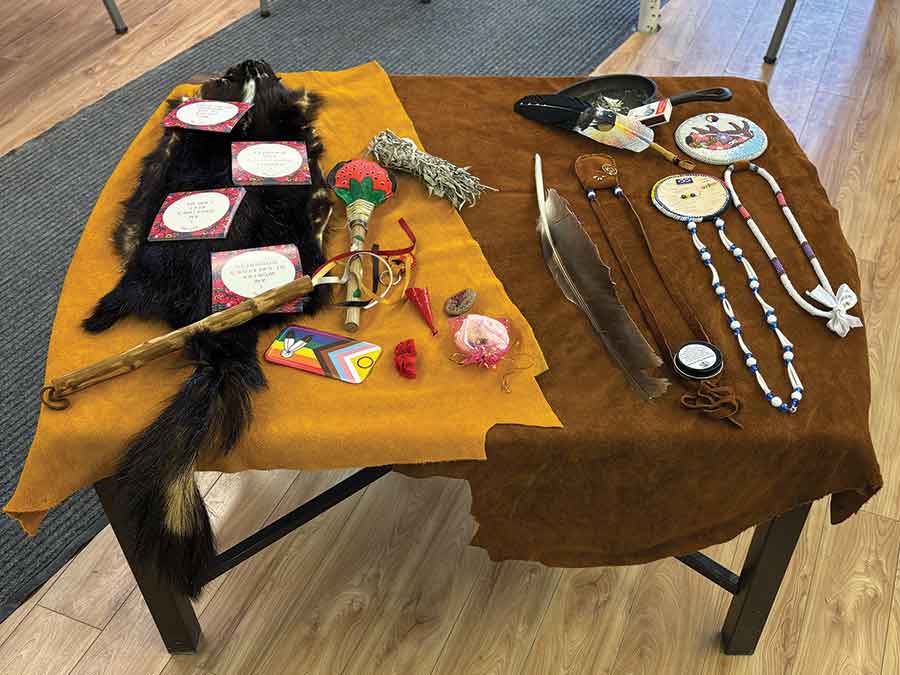
Participants from Ashern met for seven weeks through the Circles for Reconciliation program, bringing together Indigenous and non-Indigenous community members to discuss reconciliation and build relationships. Regular meetings will continue under the name Ashern Circle. Pictured is the group’s meeting space. For more information, email allisons.lfrc@gmail.com
Ashern’s Circle for Reconciliation wrapped up in May after nine participants met weekly to discuss Indigenous history, contemporary issues and pathways toward reconciliation. Facilitated through the Lakeshore Family Resource Centre by Allison Staff and Denise Beardy — trained Circles for Reconciliation facilitators — the group plans to continue meeting under the name Ashern Circle.
Circles for Reconciliation is a Canadian relationship-building initiative created in response to the Truth and Reconciliation Commission’s report and its 94 Calls to Action. The program brings Indigenous and non-Indigenous people together in small discussion groups to build trust, foster understanding and develop meaningful relationships. Organizers strive to maintain an equal number of Indigenous and non-Indigenous participants to ensure all perspectives are represented.
“Every Canadian has to do their part in reconciliation. Everyone needs to know what happened to First Nations, Inuit and Métis people of these lands,” said Grace Schedler, a Circles for Reconciliation advisory committee member. “My parents, grandparents and my ancestors tell us it will take us longer to heal because our ways have been destroyed in every way possible. I am only at the beginning stages of reconciliation, but I am willing to have these conversations with non-Indigenous people so that they can assist on the healing journey — we have to live together in this country.”
Staff said the Ashern group quickly developed into a welcoming and respectful space where participants felt comfortable sharing their experiences and viewpoints.
“Equality is very important to us,” she said. “I am so in awe of everybody’s efforts. It went so well, and I am proud of everyone who took part.”
Among the participants were Ashern residents Merle Klyne, a Métis educator, and his wife, Patsy.
Interested in Truth and Reconciliation initiatives and the Calls to Action, Klyne said he was drawn to the program because of its grassroots approach to creating change at the community level.
“I want to see the recommendations we can make and see what changes can be made at a local, community level,” he said.
Patsy said she joined for similar reasons, hoping to help bridge divisions that sometimes exist between Indigenous and non-Indigenous people.
“We both had concerns about the unhealthy attitudes that exist between Indigenous and non-Indigenous people. Too often it’s a case of us against them,” she said. “We wanted to be able to come together and learn from one another.”
Each session followed a similar format, beginning with a smudging ceremony, a land acknowledgment and a moment of silence before moving into themed discussions using a talking stick. Topics included residential schools, relationships with the land, misconceptions and issues connected to special observances such as Red Dress Day and Orange Shirt Day.
Klyne said he entered the sessions without many expectations but quickly came to appreciate the respectful atmosphere and ceremonial aspects of the program.
“Everyone was very good at listening to one another,” he said.
Patsy said hearing participants share their experiences and perspectives helped deepen her understanding of Indigenous history and contemporary issues.
“It was very interesting hearing what others had to say,” she said. “It was real information pertaining to real Indigenous history.”
She added that her appreciation for Indigenous peoples and cultures has grown significantly since taking part in the circle.
According to Klyne, education remains one of the most important tools for advancing reconciliation.
Quoting the late Murray Sinclair, Klyne noted: “Education got us into this mess and education will get us out of it.”
He believes education is needed at all levels to help people better understand both historical and current realities. He also praised Ashern Central School principal Tracey Kinkead for her efforts to promote Indigenous education within the school.
“She is motivated to use the Circles for Reconciliation in a way that helps promote Indigenous education programming in schools,” he said. “She’s gone out of her way to support that kind of education.”
Kinkead said she was excited to take part in the group and that it was a pleasure to be among such respectful and resourceful community members.
“It was a wonderful opportunity to make new connections for our school,” she added.
Although the formal Circle for Reconciliation sessions have concluded, participants plan to continue meeting under the name Ashern Circle.
The group will operate independently from the Lakeshore Family Resource Centre while maintaining a format similar to the original sessions. Meetings are expected to be held monthly throughout June, July and August before returning to a weekly schedule in the fall.
Anyone interested in participating can contact Allison Staff at allisons.lfrc@gmail.com for more information about upcoming meeting dates, times and locations.