After more than five decades of roaring engines, summer crowds and community fundraising, the Teulon Tractor Pull has come to an end.
Longtime organizer Bert Campbell, 76, confirmed that last year’s event marked the final chapter for the long-running tradition, citing rising insurance costs and increasing regulations as key factors behind the decision.
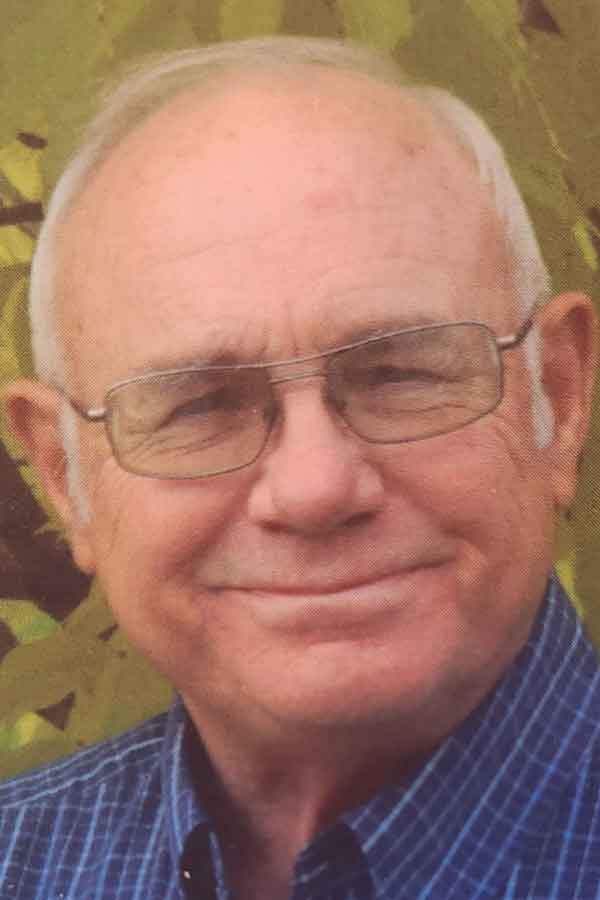
Longtime organizer Bert Campbell
“It’s a killer,” Campbell said of insurance requirements. “We’ve been doing it forever and we’ve never had a problem, but the liability is becoming too much.”
The annual event, which ran for approximately 55 years — taking place every year since 1972 aside from a brief pause during the pandemic — became a staple of summer in Teulon. It drew competitors and spectators from across the region while quietly supporting a wide range of community initiatives.
Campbell got involved in 1976 or 1977, first as a committee member, then as an announcer and eventually as chair alongside his longtime helper, Garry Dola. He explained the Teulon Tractor Pull found its roots with a group of local farmers and businessmen — including Ed Helwer, Irvin Helwer, Bill Skogan, John Skinner and Alec Dawson — who wanted to see who had the strongest tractor.
“It was pretty antique from the very beginning,” he said. “And it only grew to be a huge operation as the years progressed.”
In the early years, tractors pulled stone boats, with men stepping onto the boat every five feet to add more weight while competitors attempted to pull the load 300 feet.
Later, as tractors became bigger and more powerful, sleds became the preferred — and safer — object to pull.
Over time, high-powered specialty tractors became a major draw, including the four-engine Kernel of the Wakshinsky Brothers, the twin-engine Farmers Dream of Dola Farms and The Randy Canadian, powered by twin Allison aircraft engines producing more than 6,500 horsepower from a combined 2,300 cubic inches.
Several pulls featured a variety of additional events, including a heavy horse pull, combine crunch, dances, beer gardens and demolition derby to “add a little bit of spice” to the programming, Campbell said.
“The pull just kept getting bigger and bigger each year.”
He said crowds reached as many as 1,500 spectators each day, totalling around 3,000 over the weekend.
Many of the guests — and competitors — came from the United States, as the Teulon Tractor Pull was part of the Red River Valley Pullers Association, a tractor-pulling league made up of communities from Manitoba, North Dakota and Minnesota. Approximately two-thirds of competitors were American, and many had travelled to Teulon to participate in what Campbell said Americans called the “best tractor pull of the association” for two decades.
He said he will miss the camaraderie of visiting with his American friends, having formed several close friendships over the years.
One of his closest acquaintances is Don Dufner, more commonly known as “Mr. John Deere” in the tractor-pulling community. He often stayed at Campbell’s home while competing in Teulon.
“He just lives to be on a John Deere tractor,” Campbell said. “He’s quite the character — like many of the competitors who come up north. They just live to pull.”
Campbell said he remains in touch with many of his friends and knows they will miss the event, just as he will miss watching those relationships grow.
“They are just a bunch of friends. And although they compete, they are all there to help and care for each other in the pit.”
He credits the success of the pull to a dedicated group of volunteers and sponsors who returned year after year.
“It was never a money-maker,” Campbell said. “But it was something for the community.”
Over the decades, the tractor pull raised what Campbell estimates was a couple thousand dollars annually for several local organizations, including the Lions Club, curling rink, fire department, Wish Foundation, museum, cheer board, food bank, local health groups and community park.
The event also featured its fair share of sponsorships throughout the years, including support from Leo’s Sales and Service for nearly four decades.
While the event itself operated on tight margins, it also provided significant fundraising opportunities for other groups. The Lions Club, which ran the concession, relied on the weekend as one of its largest annual fundraisers. Other groups managed the beer gardens and gate, keeping proceeds to support their own initiatives.
Attempts to offset rising costs proved difficult. Campbell said increasing gate admission from $15 to $20 did not generate additional revenue.
“We had fewer people come, so it was the same at the end.”
Despite the financial and logistical challenges, Campbell said the decision to step away was not taken lightly. He said he looked for someone to take over, but no one expressed interest, leading to the end of the Teulon Tractor Pull era.
Looking ahead, he said he will miss the chaos and noise that came with the weekend, though he also acknowledged the relief of stepping back from the responsibility.
“It was great while it lasted, but now I will be able to sleep easy without the added stress that comes with organizing this year after year.”