Residents interested in learning the traditional Ukrainian art of pysanky will have the opportunity later this month when instructor Loris Sargeant leads a hands-on workshop at Creative Cocoon in Arborg.
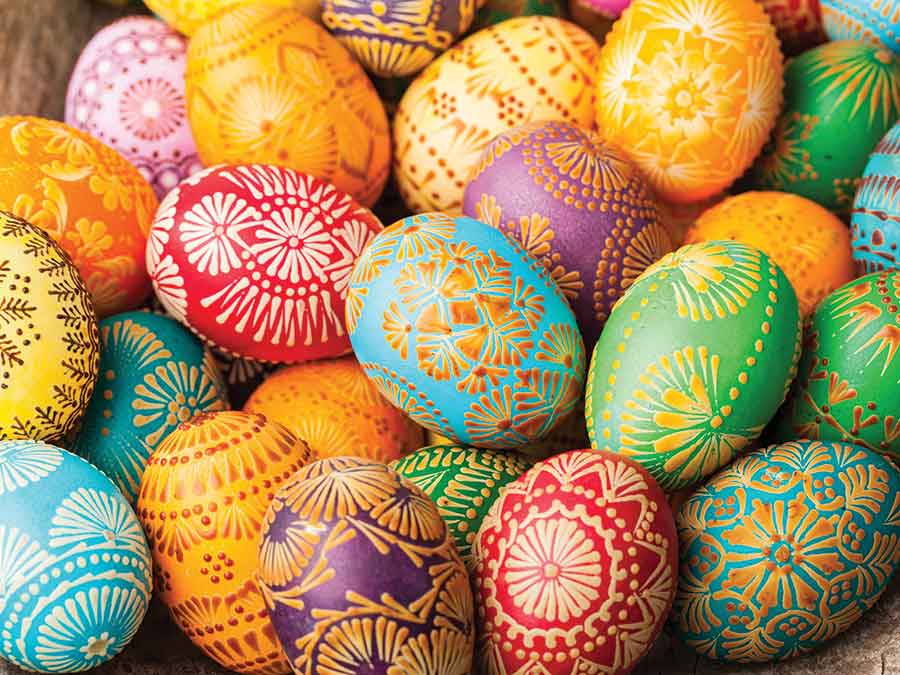
Traditional Ukrainian pysanky eggs display intricate patterns and vibrant colours created using a wax-resist dyeing technique passed down through generations
The class will take place March 28 from 11 a.m. to 2 p.m. and will run for three hours. Participants will be guided through the process of decorating traditional pysanky — intricately designed Ukrainian Easter eggs — using wax-resist techniques.
Registration costs $45 per person and includes all materials needed to complete a pysanky. A maximum of 15 participants will receive an egg to decorate and take home. Sargeant provides the use of a kistka (wax stylus), beeswax, pysanky dyes, a candle for heating the stylus, small jars for dye, vinegar, pencils for sketching designs, spoons for dipping eggs and paper towels to keep the workspace clean. Those interested can register by emailing info@thecreativecocoon.ca.
Pysanky, sometimes referred to as Ukrainian Easter eggs, are a centuries-old folk art tradition that combines storytelling, symbolism and intricate craftsmanship. The word pysanky comes from the Ukrainian verb pysaty, meaning “to write,” reflecting how the designs are “written” on the egg with wax before layers of dye are applied.
Sargeant has taught pysanky classes for a number of years and learned the craft from her mother, whose Ukrainian heritage helped bring the tradition to Canada. She was introduced to the technique at a young age and remembers making eggs with natural dyes created from ingredients such as onion skins and beets.
The basic process involves first sketching a design on the egg, then applying melted beeswax using a stylus to protect sections of the shell from dye. The egg is dipped into progressively darker colours, with additional wax layers applied along the way. Once the dyeing process is complete, the wax is removed to reveal the final pattern.
Traditional pysanky designs often include symbols drawn from folklore and nature, with different motifs representing themes such as protection, prosperity, renewal and life.
Sargeant said that although traditional designs are often used as a guide, participants are encouraged to add their own creative touches.
“Every egg, even when people start with the same design, turns out a little different,” she has said in previous workshops. “Everyone puts their own take on it.”
While the art form has deep roots in Ukrainian culture, Sargeant welcomes participants of all backgrounds.
The upcoming workshop in Arborg will introduce beginners to the basics of the craft while also sharing some of the history and symbolism behind the designs.
Organizers say the class is designed to give participants both a creative experience and an appreciation for a long-standing cultural tradition. Sargeant also offers home Pysanky parties throughout the year and is available for private bookings on weekends, giving groups the opportunity to learn the craft together in a relaxed setting.