While most people tend to take cover when treacherous weather approaches, storm-chasers stifle that instinct and head toward the tempest.
One such storm-chaser is Ethan Caners of Stony Mountain, who has spent the past several years pursuing tornadoes across Canada and the United States.
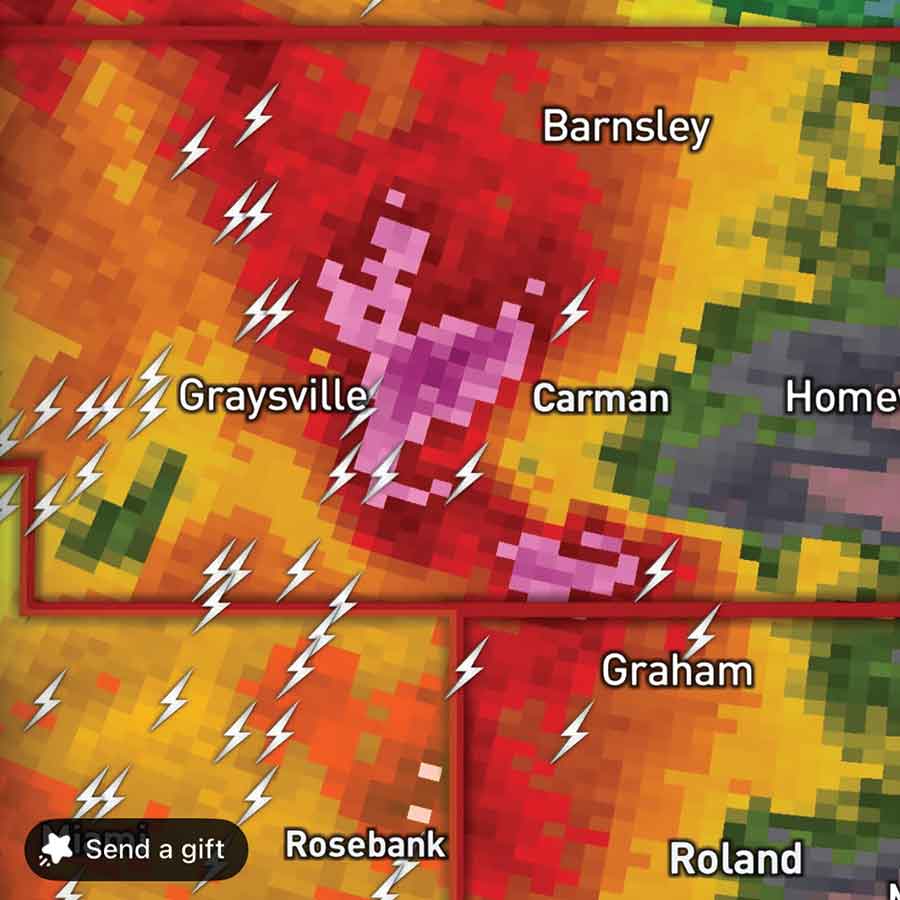
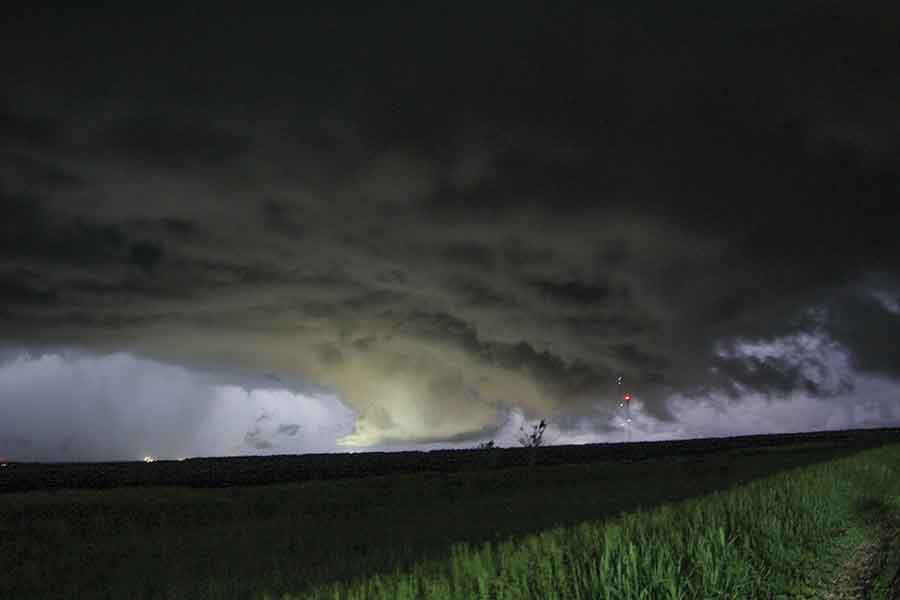
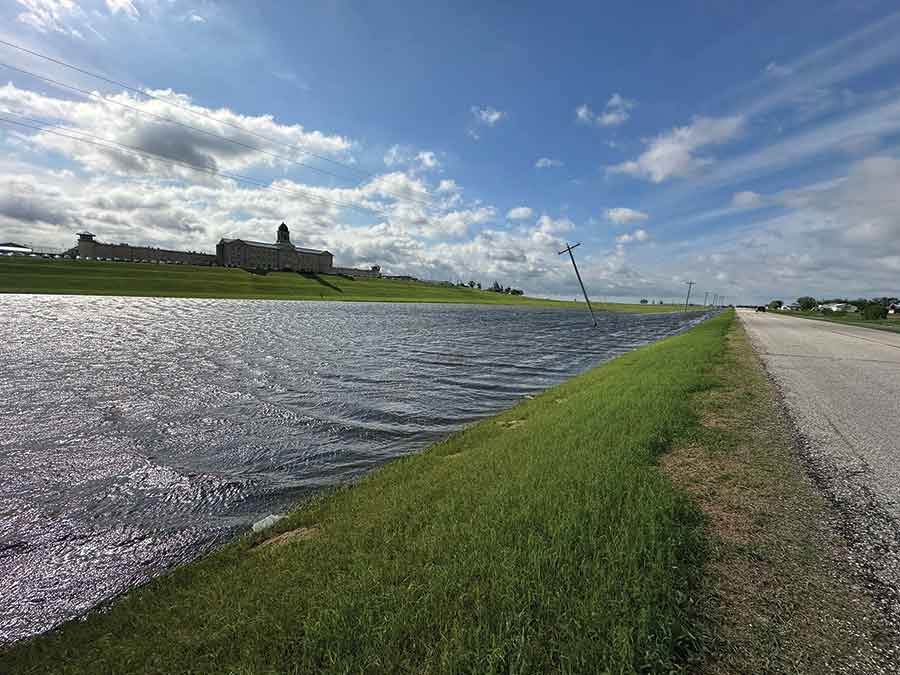
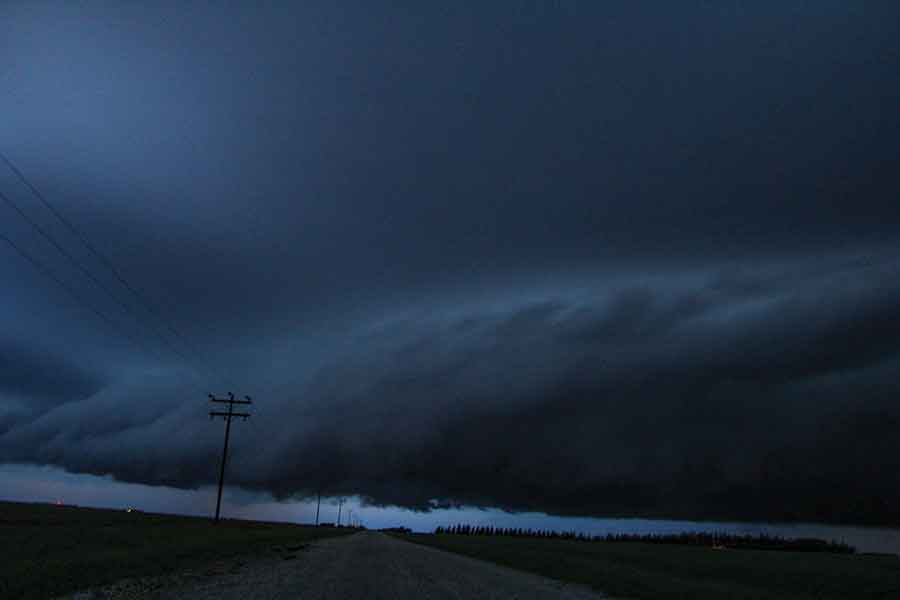
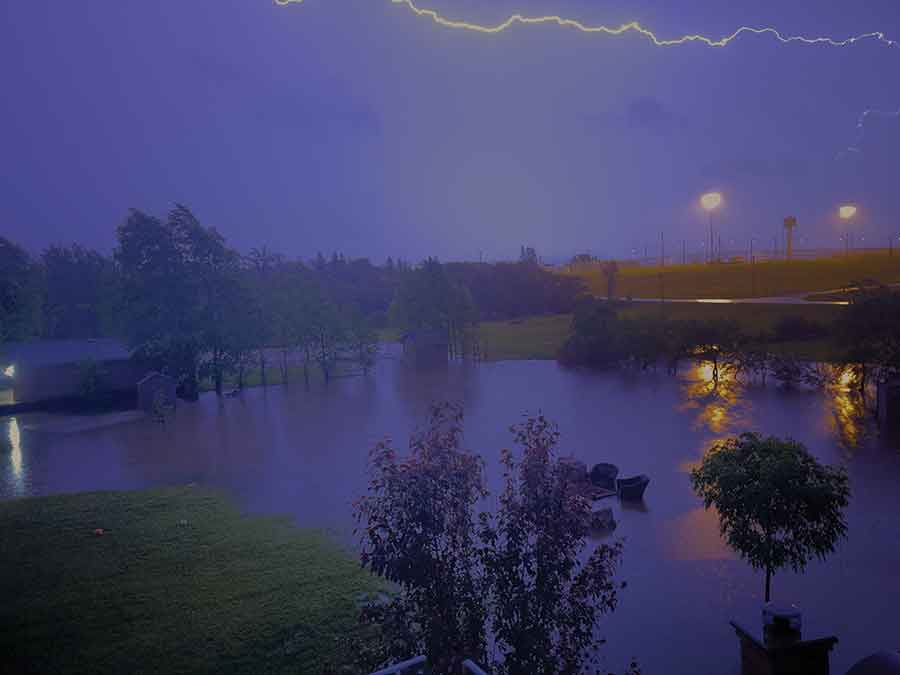
Lightning illuminated ominous storm clouds as a powerful weather system moved into the area, bringing torrential rainfall and widespread flooding
While much of Manitoba was walloped by the staggering storm on June 9, Caners was among a group that was literally out in the field to follow it. In his company were Keane Kokolsky and Brenden Sawchuk from the Winnipeg Storm Prediction Centre, as well as Connor Trobert, an intern at the weather office. Also in along for the experience were Dr. John Hanesiak, Jaydon Svensson and Eric Ayitah from the University of Manitoba atmospheric observation team.
Caners recently returned from chasing storms in Tornado Alley stretching from North Dakota down to Texas, and he likens Manitoba’s recent weather to what he has seen along that stormy stretch.
“For the time of year that it is, some of the storms we saw here were very much resembling storms we’d seen down in the Central Plains,” he said.
“It was shocking. We had the intense dew points, intense moisture return, lots of bulk shear — there was everything needed for a very violent storm day, and it seemed to have turned out that way.”
To start the day, Caners had been studying some of the convective models to learn more about the storm’s potential before heading out.
“A lot of it had a few isolated cells spawning in southwestern Manitoba. From early in the day, we thought we would have maybe a good hour or two of chasing and then it would line out — that’s when all the storms converge into one straight line — but that ended up not happening,” he said.
“We went to Souris originally and had to drive all the way back, almost as far as Elie, to get onto our first storm of the day. It was an amazing storm. It latched onto the moisture and almost stalled stationary, just producing wall clouds after wall clouds, funnels nonstop. It was beautiful.”
Caners braved the elements in his own personal storm-chasing vehicle, a 2017 Ford Escape that’s all decked out inside with camera mounts and places to put up screens for radar tracking.
“It’s not necessarily what you think a tornado-chasing vehicle should look like, but it works,” he said, adding that the U of M and weather office teams also had their own vehicles.
“We saw multiple funnel clouds. We had one tornado touch down as we were approaching it in Elm Creek at about 9:37 p.m.”
Around 10:30 p.m., Caners halted his chase after receiving a call from his family to tell him that water was approaching their Stony Mountain home.
“We got very, very lucky. We’re on the lower end of Memorial Street in Stony Mountain, and our neighbours definitely took in water. We ended up being able to save ours with a little help from a few power flashes. The power would come back on for a minute or two, so the sump pump would do it’s magic before it shut back off. The power was going on and off throughout the night until it went out completely.”
The next morning, Caners joined some of the people who conduct damage surveys after storms.
“I took a drive around town and it’s just heartbreaking. I’ve done damage analysis in other places, and it’s not as emotionally troubling as doing it in your hometown. I was seeing friends, seeing the people I say hi to everyday, with their houses two feet underwater,” he said.
“Stonewall, Stony Mountain, Balmoral all got hit so brutally hard. But we’re a good community. We bounce back and we help each other. That’s what we do.”
Caners has noticed a recent uptick in interest from would-be storm-chasers, and although he appreciates their enthusiasm, he urges them to be cautious.
“The new Twisters movie is sparking everyone’s interest and I love that. There are so many people interested in this now. But to actually go out there and storm chase without proper knowledge is not just dangerous for yourself but you also put other people in danger as well,” he said.
“If you are wanting to get into storm chasing, do some research first. Take a course on it. Get a bit of meteorological background so you’re not endangering yourself and others.”
For those who prefer to weather out the storms at home, Caners also advises them to be prepared.
“Having a generator is important, as my family learned the other night. It’s also important to have a survival kit in the safer area of your house,” he said.
“In the past few days, we’ve been hearing that some people were getting very annoyed at the warning systems we have in place with all the messages they were getting. But they’re there for a reason. They don’t issue those for a joke. When those messages are issued, you have to take shelter because there’s a very dangerous storm, possibly a tornado, heading your way. It’s very important to listen to those messages.”