What began as a career in mechanical engineering has evolved into a passion-driven mission to preserve and share a little-known chapter of Canadian history.
For his work uncovering and promoting Manitoba’s Cold War heritage, Winnipeg historian, author, playwright and educator Gilles Messier has been recognized with the 2026 Lieutenant-Governor’s Award for Historical Preservation and Promotion as an Emerging Historian.
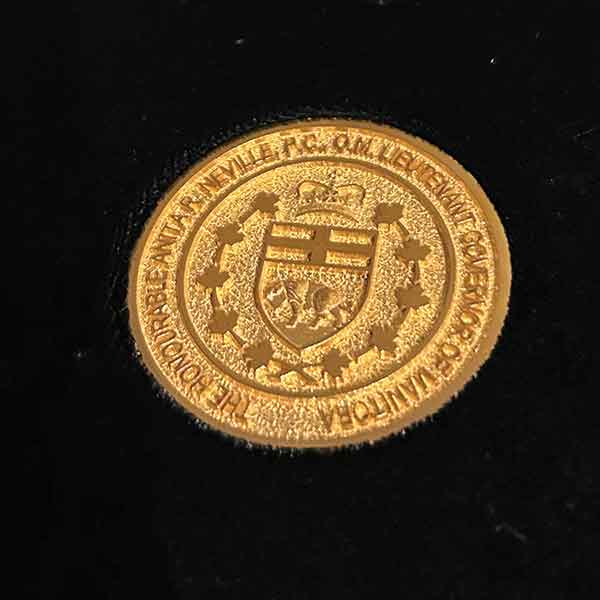
The Lieutenant-Governor’s Award for Historical Preservation and Promotion includes a commemorative medal and framed certificate
Messier was one of four Manitobans honoured May 26 at Government House in Winnipeg, where Lieutenant-Governor Anita Neville presented the awards recognizing outstanding contributions to preserving and promoting Manitoba’s history.
“The individuals selected to receive awards this year represent the many dedicated individuals throughout Manitoba who take great care in preserving and promoting this province’s rich and vibrant history,” Neville said during the ceremony.
For Messier, the recognition is the culmination of years spent researching an obscure but important aspect of Canada’s Cold War preparedness.
Today, he is widely regarded as the leading expert on the Nuclear Detonation and Fallout Reporting System (NDFRS), a network of monitoring posts established across Canada during the Cold War to detect and report the effects of a potential nuclear attack.
While the system once played a significant role in Canada’s civil defence planning, it received little attention from historians for decades.
Messier changed that.
Through extensive research, he documented how the network operated and where many of the monitoring stations were located. His work eventually led him to southern Manitoba and an unexpected connection with the Miami Railway Station Museum.
During his research, Messier discovered that the museum’s historic railway station had once housed an NDFRS monitoring post. Recognizing the historical significance of the site, he contacted the museum and proposed preserving one of the remaining fallout-reporting bunkers as a public exhibit.
The idea quickly gained momentum.
Working alongside museum volunteers, Messier spearheaded the project, providing historical research, technical guidance and oversight throughout the restoration process. During the summer of 2024, a dedicated team worked to return the bunker to its original Cold War-era appearance.
The result is a one-of-a-kind exhibit that offers visitors a rare glimpse into a period when the threat of nuclear conflict shaped government planning and everyday life across North America.
Opened to the public in 2025, the restored bunker is believed to be the only exhibit of its kind in Canada.
The project has not only preserved an important piece of Manitoba history but has also increased interest in the Miami Railway Station Museum, drawing visitors eager to learn more about Canada’s Cold War preparedness efforts.
Messier’s contributions extend far beyond the museum walls.
Through his educational YouTube channel, Our Own Devices, he uses storytelling, research and visual media to bring historical topics to life for audiences across Canada and around the world. His work demonstrates how modern technology can help historians reach new generations and make complex historical subjects accessible to a broader audience.
That ability to connect the past with the present was highlighted during the awards ceremony.
Neville noted that advances in media and technology are allowing historians to share Manitoba’s stories in ways that were once unimaginable.
“Thanks to the work of the people being honoured this evening, the story of Manitoba is being told in interesting, engaging ways to audiences both here and around the world,” she said.
Established in 2011 by former lieutenant-governor Philip Lee, the Lieutenant-Governor’s Award for Historical Preservation and Promotion recognizes Manitobans who have made exceptional contributions to preserving and sharing the province’s heritage. More than 70 individuals have been honoured since the program began.
Recipients are selected through a nomination process administered by the Manitoba Historical Society. This year, the society reviewed 19 nominations from across the province before recommending four award recipients.
As patron of the Manitoba Historical Society, Neville emphasized the importance of preserving historical knowledge for future generations.
“Looking back, we can better understand how and why history has made us the people and the province we are today,” she said.
For communities such as Miami, where local volunteers partnered with Messier to preserve a unique piece of Cold War history, that message resonates strongly.
The restored fallout-reporting bunker stands as more than a museum exhibit. It serves as a reminder of a period when global tensions reached into even the smallest Manitoba communities and demonstrates how dedicated individuals can ensure those stories are not forgotten.
Through his research, writing, public education and hands-on preservation work, Messier has helped rescue an overlooked chapter of Manitoba’s history from obscurity. In doing so, he has ensured that future generations can better understand the challenges, fears and resilience that shaped life during the Cold War.
For that contribution, Manitoba’s newest Lieutenant-Governor’s Award recipient has earned a place among the province’s most dedicated historical advocates.