A Rockwood-area resident is encouraging rural homeowners to test their well water following recent flooding after laboratory results revealed E. coli contamination in her family’s drinking water despite the water appearing completely normal.
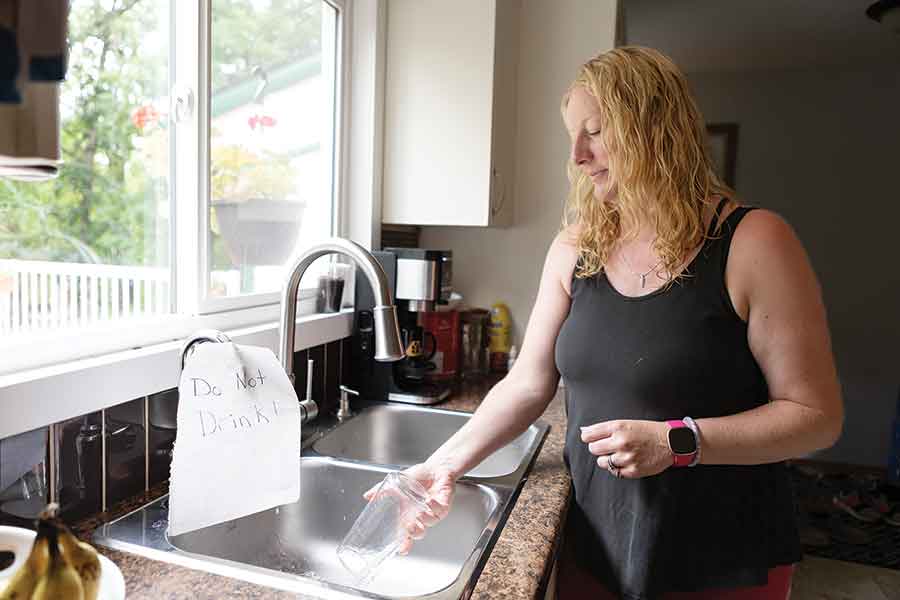
Candace MacMillan dumps a glass of water at her Rockwood-area home after laboratory testing revealed E. coli contamination in her family’s well following recent flooding. Although the water looked, tasted and smelled normal, MacMillan is encouraging other rural residents with private wells to have their water tested if flooding occurred on or near their properties
Candace MacMillan decided to have her well water tested after seeing the RM of Rockwood encourage residents with private wells affected by flooding to check their water quality.
Although flooding had occurred on her property, she had no concerns about the safety of her drinking water.
“I had no concern about the water, but we had heavy flooding in our yard, so I thought I better follow the recommendations,” said MacMillan.
The family experienced significant flooding during the June storm, with much of the front yard and surrounding bush remaining underwater for several days. While floodwater did not reach the well itself, MacMillan said it came within about 30 feet.
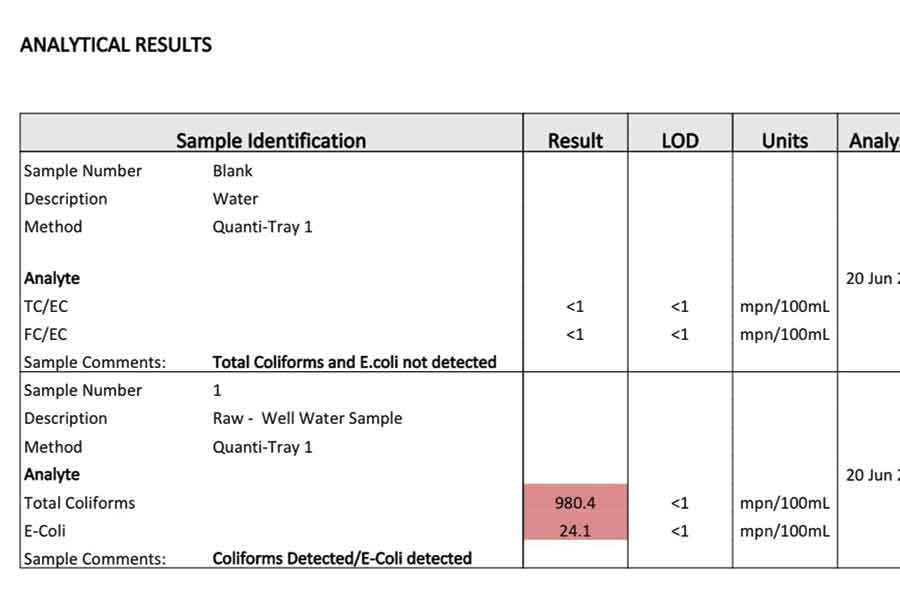
Laboratory results later showed total coliform levels of 980.4 MPN per 100 millilitres and E. coli levels of 24.1 MPN per 100 millilitres. The presence of E. coli in drinking water is considered unsafe and may indicate fecal contamination.
MacMillan said the results were unexpected because there were no obvious signs of contamination.
“The water looked, tasted and smelt normal,” she said.
The family has lived on the property since 2013 and has tested its well water in the past without issue. MacMillan believes the recent flooding contributed to the contamination.
Shortly after obtaining the testing kit, she began experiencing gastrointestinal symptoms, including nausea and a loss of appetite. Her children experienced mild gastrointestinal symptoms as well, although no one required medical treatment.
“I am the one in our household who drinks the most well water. I always brag how good my water tastes,” she said.
According to provincial flood recovery information, any well-water system, whether deep or shallow, can become contaminated during a flood. Wells are particularly vulnerable if they are located near septic fields, livestock operations, abandoned wells, areas where water pools or if neighbouring wells have been affected by flooding.
Provincial officials say bacterial contamination, including E. coli and total coliform bacteria, generally cannot be detected by colour, taste or odour, making laboratory testing essential following flooding or significant rainfall events.
The province advises residents whose wells may have been impacted by flooding to boil water intended for drinking or food preparation for at least one minute or use bottled water until testing confirms the water is safe.
Since receiving the test results, MacMillan’s family has switched to bottled water and boiled water for drinking and cooking.
“We have been boiling and using bottled water,” she said.
The family plans to shock chlorinate the well but is waiting until standing water has fully receded from nearby properties.
“We have decided to wait to shock the well until it is all dried up, out of fear of recontamination,” said MacMillan. “We will not consume well water until then.”
Provincial guidelines note that flood-affected well water can still be used for laundry, bathing and washing dishes, although residents should avoid swallowing the water. Young children and infants should be sponge-bathed to reduce the risk of ingesting contaminated water.
MacMillan said she decided to share her experience publicly because she wants other rural residents to understand that contaminated well water is not always obvious.
“I don’t want anyone getting sick from their drinking water,” she said. “I’m not sure everyone would have seen the RM’s post or know they are helping with well-water testing.”
She is encouraging anyone who experienced flooding on or near their property to have their water tested as a precaution.
“If they experienced flooding on or near their property, they should test as a precaution even if their water seems unchanged,” she said.
MacMillan hopes others take away one important lesson from her family’s experience.
“Contaminated water can still look clear and taste and smell unchanged.”
The RM of Rockwood has distributed approximately 300 water-testing kits and, as of June 22, had received 132 samples for laboratory testing.
Chief Administrative Officer Chris Luellman said the municipality launched the initiative following a provincial announcement encouraging well-water testing in flood-affected areas.
“Please test your well,” said Luellman. “Don’t assume it’s okay.”
Luellman said any area affected by the June rainfall event could be susceptible to contamination and urged residents not to rely on the appearance of their water when determining whether it is safe.
The RM is offering free transportation of water samples to the laboratory through June 23.
Provincial officials noted that private well owners are responsible for maintaining the safety of their own water supply and are encouraged to test their water regularly, particularly following flooding or significant rainfall events.
In response to the recent flooding, the Manitoba government has temporarily increased its private well-water testing subsidy to 100 per cent for flood-affected well owners. The program covers testing for E. coli and total coliform bacteria through Duracan Laboratory.
Municipalities, watershed districts and Duracan Laboratory are working together to improve access to testing for residents whose wells may have been affected by flooding.
The Office of Drinking Water is available to assist private well owners with questions regarding testing, interpreting results, shock chlorination and well maintenance.
Luellman said contamination concerns can remain after floodwaters recede and encouraged residents to err on the side of caution.
“It’s always a concern of the unknown,” he said. “The best answer is to be safe and test your well.”