As historic rainfall inundated communities across the Interlake region last week, one of Manitoba’s most important wetlands was facing its own battle with rising water.
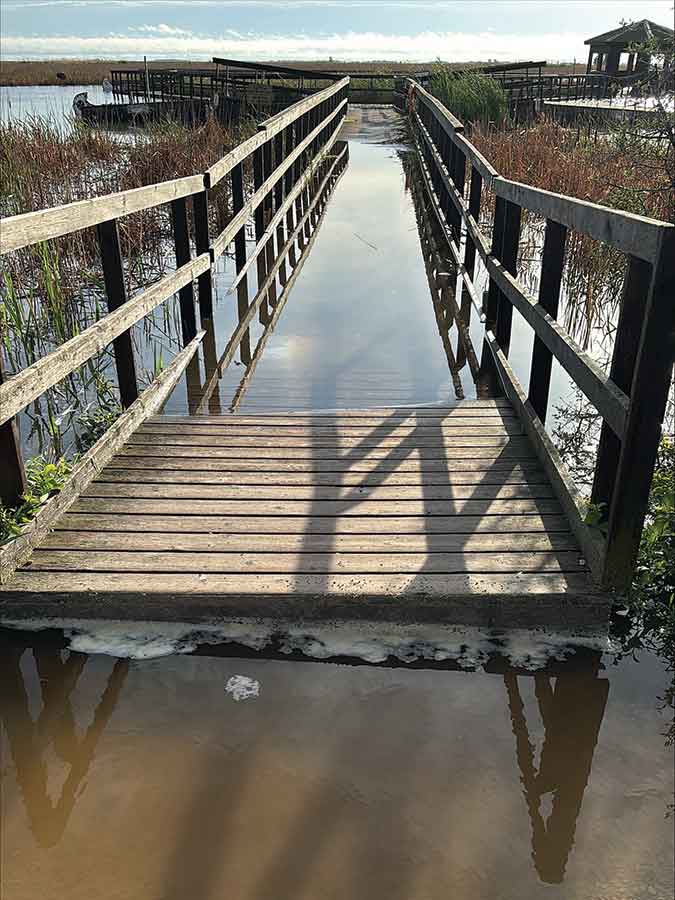

Oak Hammock Marsh received more than 240 millimetres of rain during the June 9-10 storm, causing widespread flooding across the site, damaging infrastructure and forcing a temporary closure of the popular wildlife destination.
While the flooding disrupted operations and affected wildlife habitat, marsh officials say the wetland also demonstrated why wetlands remain one of nature’s most effective flood-mitigation tools.
“Our rain gauge located on the rooftop indicated that we received over 240 mm of rain during the storm,” said Jacques Bourgeois, manager of Oak Hammock Marsh.
The rainfall overwhelmed portions of the marsh and surrounding infrastructure, particularly near the Harry J. Enns Wetland Discovery Centre.
“Sadly, the most affected areas were the ones closest to the Discovery Centre, including our Willow Retreat Building adjacent to the Centre,” Bourgeois said.
The storm left its mark throughout the site. Water entered the Wetland Discovery Centre and flooded the theatre, while power outages and flooding created additional challenges for staff.
The marsh’s drinking water well was flooded, the sewage lift station stopped operating and several trails and boardwalks were submerged. Floating boardwalks were lifted by rising water, portions of raised boardwalks disappeared beneath floodwaters and some dikes were breached.
The damage forced officials to temporarily close the facility and cancel scheduled school field trips.
According to Bourgeois, the scale of flooding exceeded anything staff had experienced previously.
“While we had some high water in the past, the extent of the flood caused by last week’s rainstorm was unprecedented,” he said.
As conditions worsened during the storm, maintenance staff worked around the clock to protect facilities and limit damage.
“The maintenance staff was on high alert during the night of the storm and dutifully worked around the clock to mitigate the impact of the flood to the Wetland Discovery Centre,” Bourgeois said.
Crews focused on identifying priority areas where water was entering buildings, pumping water and sandbagging vulnerable locations.
Since then, recovery efforts have progressed steadily. Power has been restored, the sewage lift station is once again operational and water levels have receded significantly across much of the site.
Staff are continuing work to restore drinking water service by disinfecting the flooded well once water levels drop further.
The improvement in conditions has allowed most areas of the marsh to become accessible again, and school programming has resumed.
Officials expect the marsh to fully reopen to visitors this weekend, in time for its annual Father’s Day Waterbug Derby.
While infrastructure can be repaired, the storm likely had lasting consequences for some wildlife species during an important nesting period.
“Many species likely lost their nests during the flood, including some ducks, shorebirds and songbirds nesting on or near the ground,” Bourgeois said.
Although some species may attempt to nest again this season, others will have to wait until next year.
Despite the challenges created by the storm, Bourgeois said the event also highlighted the vital role wetlands play during extreme weather events.
Oak Hammock Marsh is designed to capture runoff from surrounding lands and store water before slowly releasing it over time. The process helps reduce peak flows and provides natural flood protection for neighbouring areas.
“The marsh performed its duty very well as it did capture a very impressive amount of runoff water,” Bourgeois said.
The ability of wetlands to store excess water has become increasingly important as communities face larger and more frequent rainfall events.
“Wetlands help mitigate the effects of flood and should be an integral part of the landscape,” Bourgeois said. “In the case of a large rain event like we had, or after the snow melts in the spring, wetlands are our best allies as they store the excess water that would otherwise cause damage to property.”
While a few trails remain underwater, conditions continue to improve daily. Bourgeois said the organization will review the event and consider whether additional flood-control measures are needed to prevent future disruptions.
“We may have to revisit our flood control strategies to make sure that such an event doesn’t interrupt our regular operations,” he said.
For now, however, staff are focused on reopening the site and welcoming visitors back to a marsh that not only endured the storm, but also helped lessen its impact beyond its boundaries.