A proposed limestone quarry near Stonewall drew a large and vocal response March 19, as approximately 160 people attended a public hearing hosted by the Rural Municipality of Rockwood.
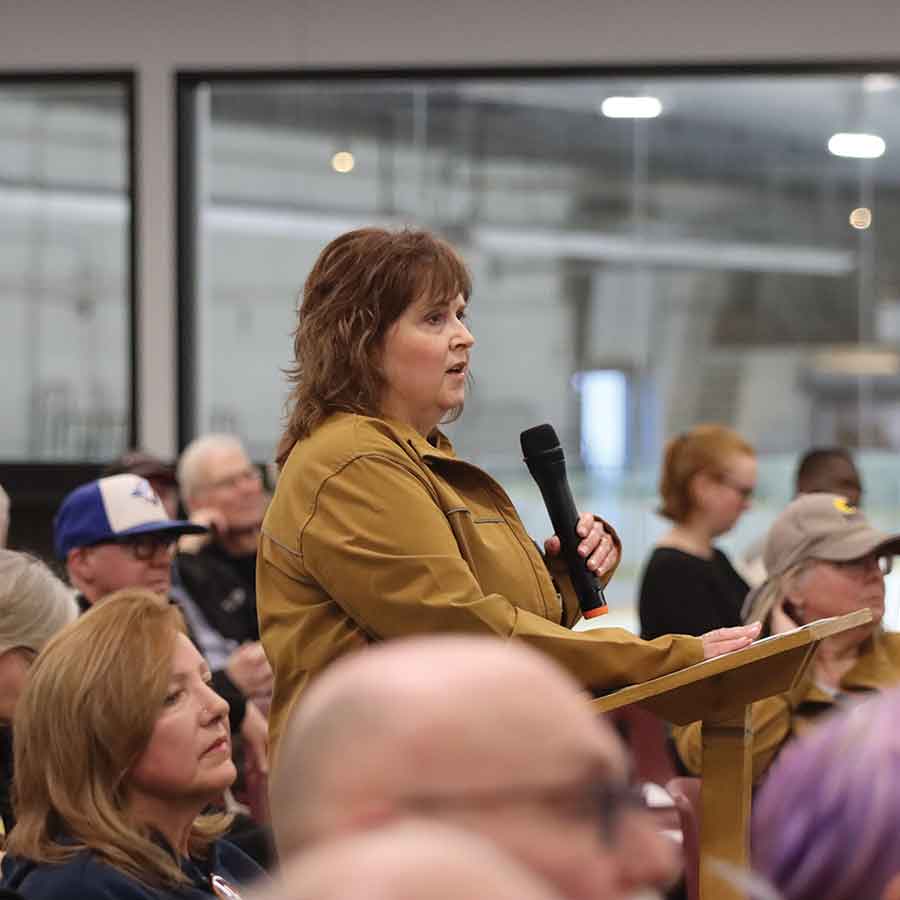
Judy Stearns, co-founder of Manitoba Black Bear Rescue, speaks at a public hearing in Stony Mountain on March 19, warning the proposed quarry could jeopardize the future of the wildlife rehabilitation facility
Reeve Wes Taplin chaired the meeting at the Stony Mountain Community Centre, where council heard presentations from provincial planners, the South Interlake Planning District and representatives of applicant Amrize Canada Inc. before opening the floor to public input.
“This hearing is held … to receive public input on conditional use application RWC 11-25,” Taplin said, emphasizing the importance of respectful dialogue.
The application seeks approval to establish an aggregate extraction operation on approximately 370 acres of agricultural land located between a quarter-mile and 1.5 miles from the Town of Stonewall boundary.
Jessie Russell-Edmonds, acting regional manager with Manitoba’s Community Planning Services Branch, outlined the provincial review, noting the land is designated agricultural and currently used for farming. While provincial policy supports mineral extraction, she said municipalities must ensure developments are compatible with surrounding land uses and do not negatively impact residents or future growth.
She noted concerns can include noise, dust, vibrations and increased truck traffic, and highlighted that portions of the site fall within a one-mile buffer intended to protect Stonewall’s long-term expansion.
“Council will need to consider if the proposed operation is compatible with the general nature of the surrounding area and will not be detrimental to the health or general welfare of people living or working nearby,” she said.
Although provincial departments raised no major objections, conditions were identified, including haul route approvals, water infrastructure permits and heritage protections.
Representing the South Interlake Planning District board, acting chair Mike Palmer urged council to reject the proposal, citing the one-mile buffer zone.
“Given the clear policy direction regarding the one-mile buffer zone, the SIPD board believes that new quarry developments within this area would not meet the consistency requirement and therefore should not be approved at this time,” he said.
Amrize representatives outlined their proposal, stating the site would be used strictly for extraction, with no on-site processing or public sales. General manager Greg Suderman said material would be hauled to an existing facility.
“This site is not intended for public purchase of limestone products but rather the minimal activity needed to extract this important resource,” he said.
Planning consultant Tom Jansen said exploration confirmed high-quality limestone deposits, with development expected to occur in phases over several decades. The proposal includes setbacks, berms and vegetation buffers, with approximately 25 truck trips per day anticipated.
Jovian Yang, land resource manager with Amrize, said blasting would occur about once per month and remain within provincial limits, with groundwater monitoring in place.
“We are committed not only to meet regulatory requirements but also going beyond them,” Yang said.
Two letters of support were also submitted. Geological engineer Jeff Yablonski highlighted the industry’s economic contributions, noting quarry levies generate more than $2 million annually for the RM and support between 120 and 200 jobs. Rockwood resident Michelle Rossnagel cited the importance of limestone for infrastructure and said quarry operations can coexist with surrounding land uses.
However, the majority of speakers voiced opposition.
Judy Stearns, co-founder of Manitoba Black Bear Rescue, said the proposal could force the closure of the facility.
“We chose this location because it was quiet and off the beaten path, and never imagined a quarry would be proposed this close,” she said. “If this goes ahead, it would most likely force the closure of our facility.”
She said blasting, noise and dust would cause stress to rehabilitating cubs and could affect water sources and habitat.
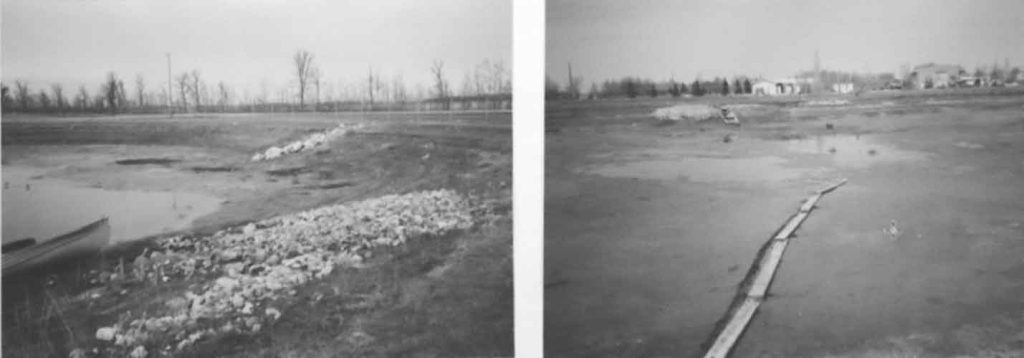
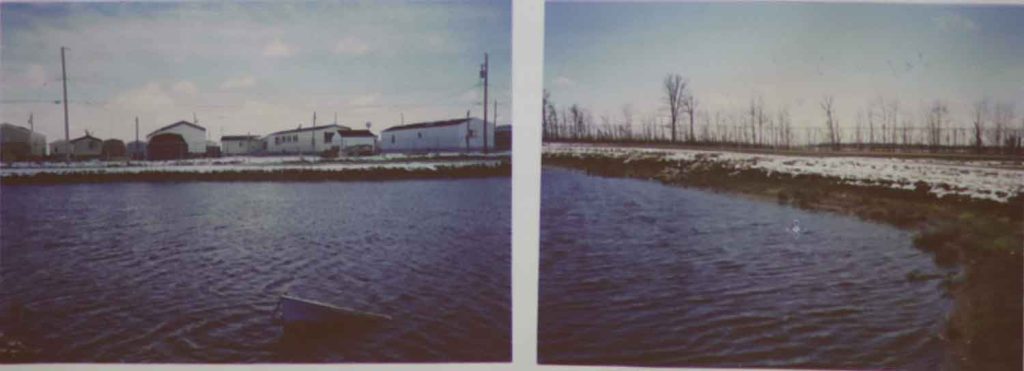
Lisa Grayson, a longtime area resident, raised concerns about the long-term impacts of quarry blasting, pointing to past experiences in the community. She described what she believes was the collapse of a man-made pond near the Stonewall Trailer Court following a major blast in April 1990, when water levels dropped significantly over several days and a hole was later found in the bedrock.
Grayson said the effects of blasting can extend well beyond the immediate site, depending on factors such as blast size, atmospheric conditions and local geology.
“The science is out there — effects from a quarry blast can be felt miles away,” she said.
She added that more recent blasting has continued to affect her property, located roughly 1.5 miles from existing quarry activity.
“In about six weeks, my house has been struck from blasting three times,” she said. “My dogs jump and bark — you can feel it.”
Grayson said her family previously attempted to investigate the issue, but lacked the resources to pursue legal action against a large company.
“We cannot afford to be complacent here,” she said.
Terrence Small, who lives just south of the proposed site at the corner of Road 78 and Road 4E, said his primary concern is the safety of his young family, particularly the risk of fly rock from blasting. Small told council his home sits within roughly 150 to 200 metres of the property, with portions of his yard extending even closer to the proposed operation.
“My kids are outside all the time — that’s why we moved to the country,” he said. “What is the cost of my children’s safety?”
While acknowledging the need for industry, Small urged council to go beyond the provincial minimum setback, asking that the buffer distance be increased from 400 metres to at least 600 metres to account for worst-case scenarios and the unpredictability of blasting.
Samantha McKewon raised concerns about traffic safety, citing a personal loss involving a gravel truck.
“With 25 trucks a day, six days a week, those odds are way higher than they were before,” she said. “There will be so many families on that road intersecting with those trucks.”
Maggie Fitzpatrick highlighted the expansion of quarry operations over time, noting the footprint has grown from smaller than the Town of Stonewall in 1984 to approximately 13 square kilometres today.
“We can’t allow the quarries to expand further than this current footprint,” she said. “It’s time in Rockwood that we draw the line.”
Radio host and Black Bear Rescue volunteer Ace Burpee said the facility has widespread public support.
“To have that not exist anymore would be a horrendous look for Manitoba,” he said.
Sue Cieslar shared her family’s experience living near multiple quarries, saying they were eventually forced to sell their farm at a loss.
“We were totally surrounded, and no one was ever going to buy our property,” she said. “You can’t make it work with a quarry.”
Wayne Peters raised concerns about groundwater impacts.
“What happens when it’s damaged and we no longer have a water source?” he said.
Following the presentations, Suderman was expected to respond to questions from attendees, but that portion of the meeting was adjourned before responses could be provided. Questions raised included concerns about aquifer protection, drill hole depth and whether supporters of the project had financial ties to the industry.
Council is expected to consider the application at a future meeting.