With the cost of food continuing to push some Manitobans to the brink of food hunger, the provincial NDP government plans to implement a tax break on select products in grocery stores.
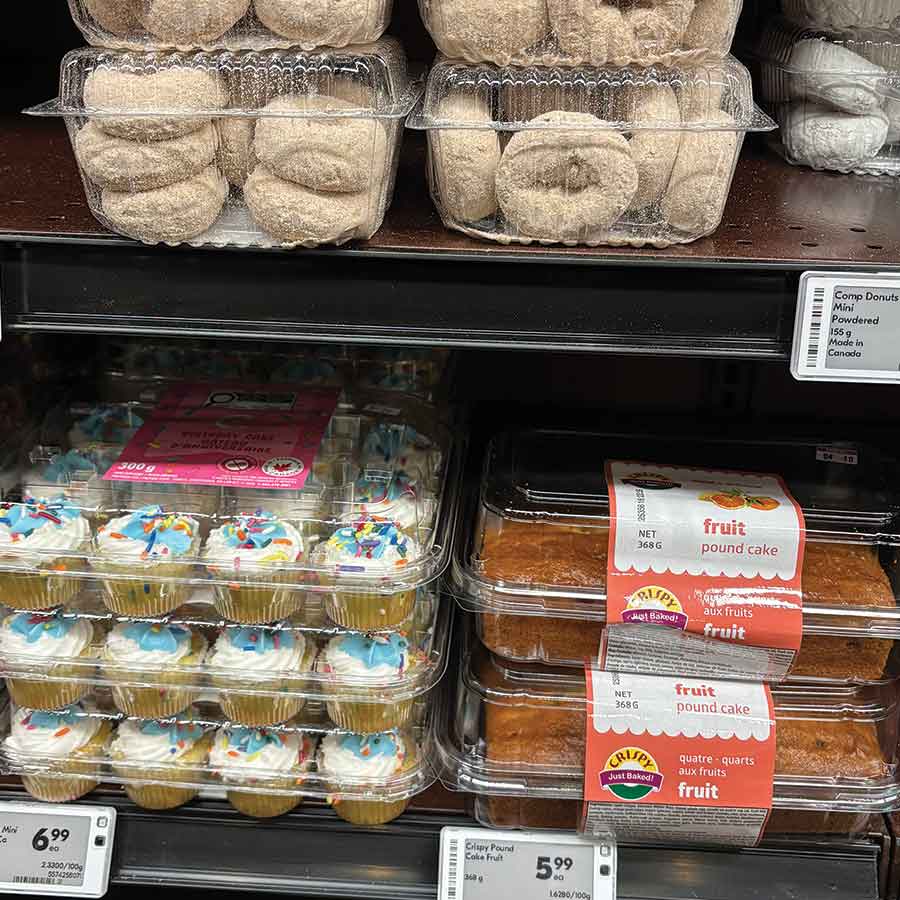
Standard Photos by Patricia Barrett
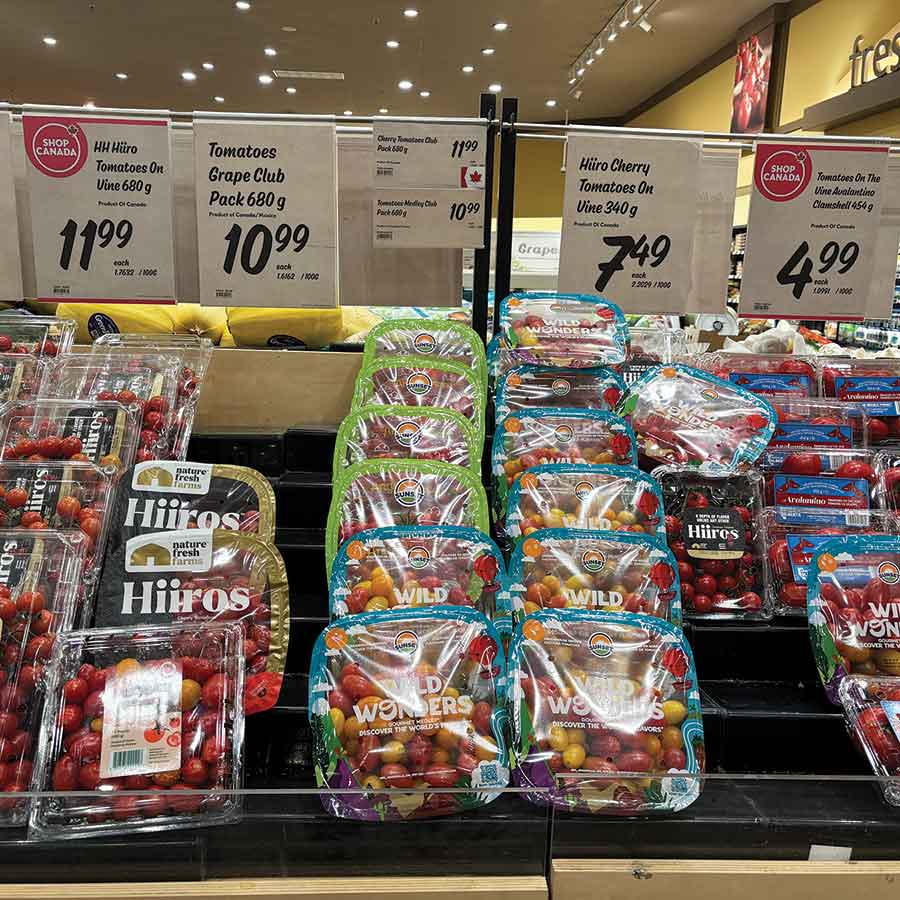
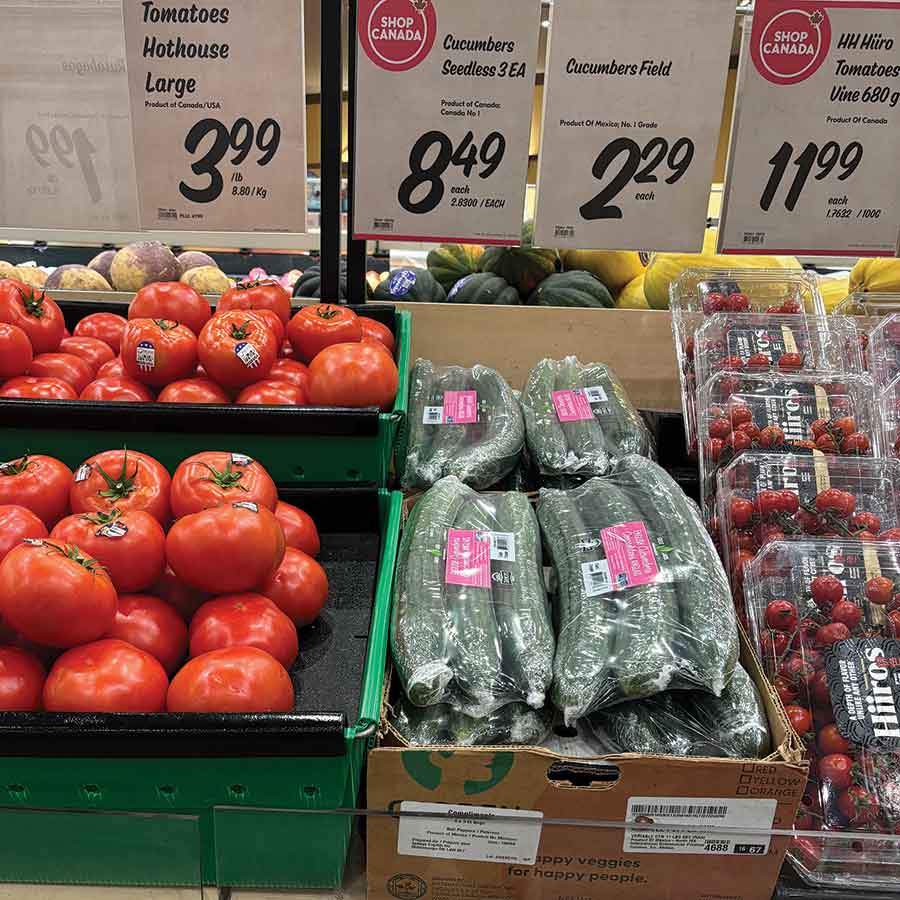
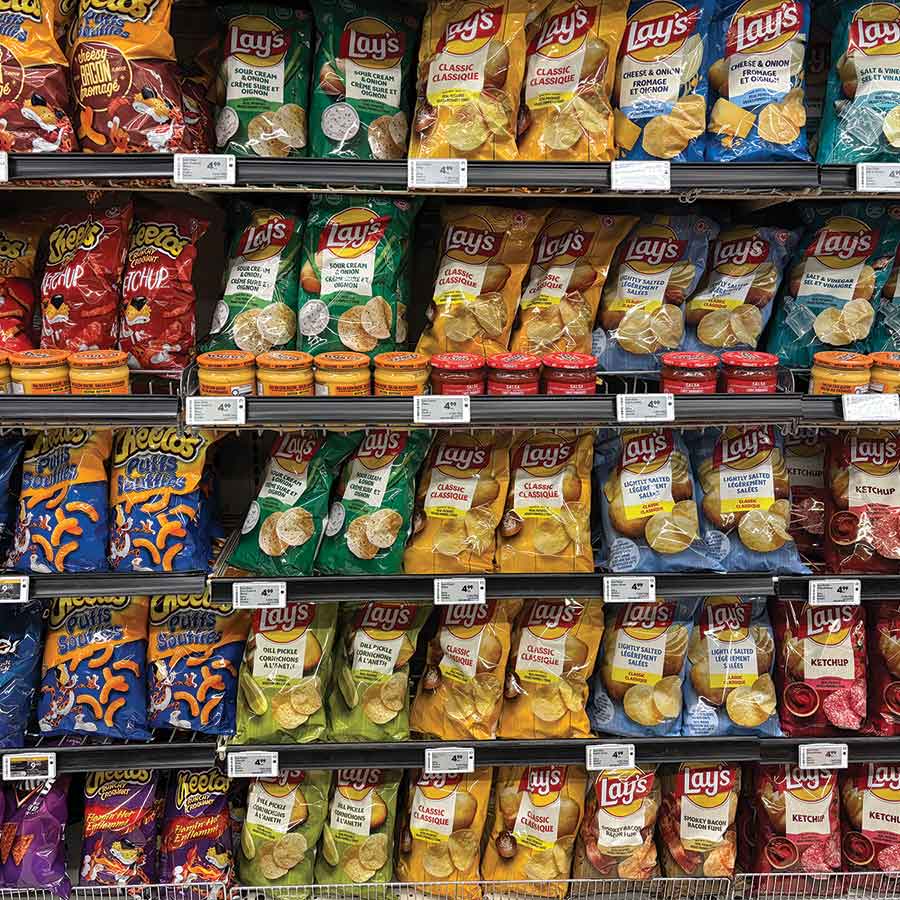
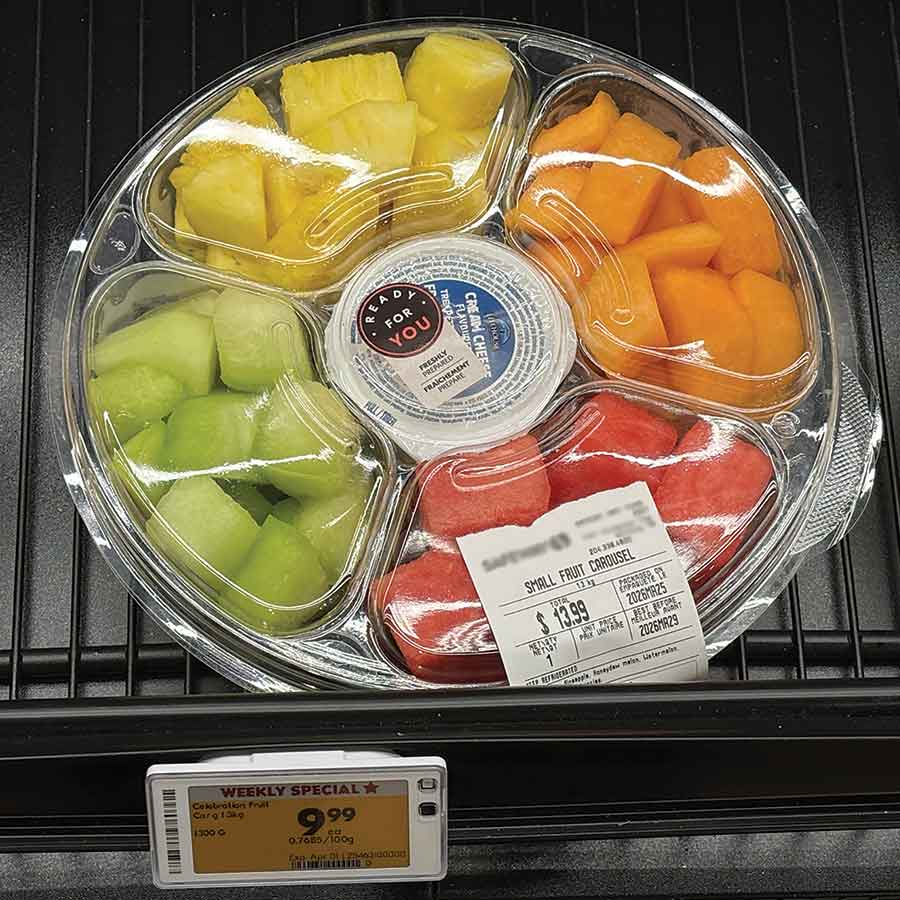
The provincial government intends to remove the PST from prepared food items, such as the fruit tray (top row middle), and from ultra-processed foods such as chips, cupcakes and donuts. The price of fresh fruits and vegetables continues to skyrocket, with items such as cherry tomatoes priced at $11 to $12, and peaches, pears and plums from South America priced at $4.99/lb at one city grocery store last week.
As part of Budget 2026, released last week, the government will remove the provincial sales tax (PST) from ready-to-eat food and other edibleproducts starting July 1.
The PST cut is intented to apply only to grocery stores; products sold in small convenience stores and restaurants will still be subject to PST.
Manitoba premier Wab Kinew announced the tax-relief measure last week, saying he recognizes the pressure faced by many Manitobans.
“Manitobans are feeling the cost of groceries every week,” said Kinew in a March 25 news release. “Budget 2026 offers real relief for Manitoba families on the items you pick up when you are in a rush to feed the family before hockey practice and swimming lessons.”
The list of items that will be exempt from the PST include ready-to-eat sandwiches, soups, rotisserie chicken, prepared fruit and vegetable platters, chips, salted nuts, candy, muffins, cupcakes and other baked goods, and carbonated drinks and fruit juices.
The government embarked on a study earlier this year to look at the overall affordability of food.
“In February, we launched a government grocery study to examine food prices and affordability provincewide, including access, availability, market concentration and unfair pricing practices that contribute to higher grocery costs,” states the budget. “This study will help us identify steps the provincial government can take to lower grocery costs.”
The high cost of food continues to exert undue pressure on household budgets, with fruit, vegetables, meat, bread and milk becoming unaffordable to some Manitobans.
Winnipeg-based Harvest Manitoba welcomed the PST cut, saying in the news release that any means of saving money on groceries can make a difference to those forced to make choices between eating and other expenses.
Although the PST cut is sure to be appreciated, many of the items the government is exempting are ultra-processed foods (UPF), which scientific studies have linked to poor health outcomes.
UPFs are industrial formulations that may contain some measure of food ingredients, but also contain combinations of fat, salt and sugar and other substances harmful to health. UPFs undergo chemical modifications when they’re made and include additives that make the final product hyper-palatable, according to a 2019 report titled Ultra-processed foods, diet quality, and health using the NOVA classification system published by the United Nations’ Food and Agriculture Organization.
UPF products include breakfast cereals, energy bars, cookies, fruit and carbonated drinks, packaged snacks, chocolate, candy, ice cream, yoghurts, mass-produced breads, margarine and other spreads, pies, nuggets and sticks made from chicken or fish, sausages, hot dogs, instant soups and meal replacement shakes.
The consumption of UPF products can lead to excessive levels of sodium, sugar and fat intakes. They can also fail to deliver adequate intake of dietary minerals such as potassium and magnesium, vitamins, fibre and protein.
UPFs are associated with a range of harmful health conditions, including obesity, cardiovascular disease, cancer, depression, asthma, gastrointestinal disorders and frailty.
“In sum, the evidence from analyses of nationally-representative data sets collected in 11 countries from 2001 to 2015 shows that the displacement of non-ultra-processed by ultra-processed foods is consistently associated with an overall deterioration of the nutritional quality of diets,” states the report. “This has several important implications for public health including a clear potential to increase the risk of several non-communicable diseases.”
The provincial government declined to comment when asked whether it has concerns that removing the PST may encourage people to turn to UPF products as the cost of real food increases, and whether it anticipates rising health-care costs associated with the consumption of UPF products.
The plan to cut the PST on grocery store items comes after a number of provincial government interventions to help lower the cost of living for Manitobans. Those included the elimination of the gas tax and a price freeze on a one-litre carton of milk.
In Budget 2026 the government will be extending measures to lower the cost of groceries, including banning algorithmic pricing that uses consumers’ data to raise item costs, potentially implementing regulatory oversight over “shrinkflation,” in which stores charge the same price for a product that has shrunk in weight or volume, and allowing competition in the grocery industry by removing grocery chains’ exclusive property agreements that prevent other grocery chains operating in their vicinity.
The government is also introducing supports for people with disabilities, free transit for children, free child care for low income families, increasing the renters affordability tax credit for Manitobans – including a top-up for seniors – an affordability tax credit for homeowners, and measures to lower costs for farmers.


