As Easter approaches, kitchens are filling with the rich aroma of melting chocolate and according to professional chocolatier Rachel McKinley, a few simple techniques can turn homemade treats into something special.
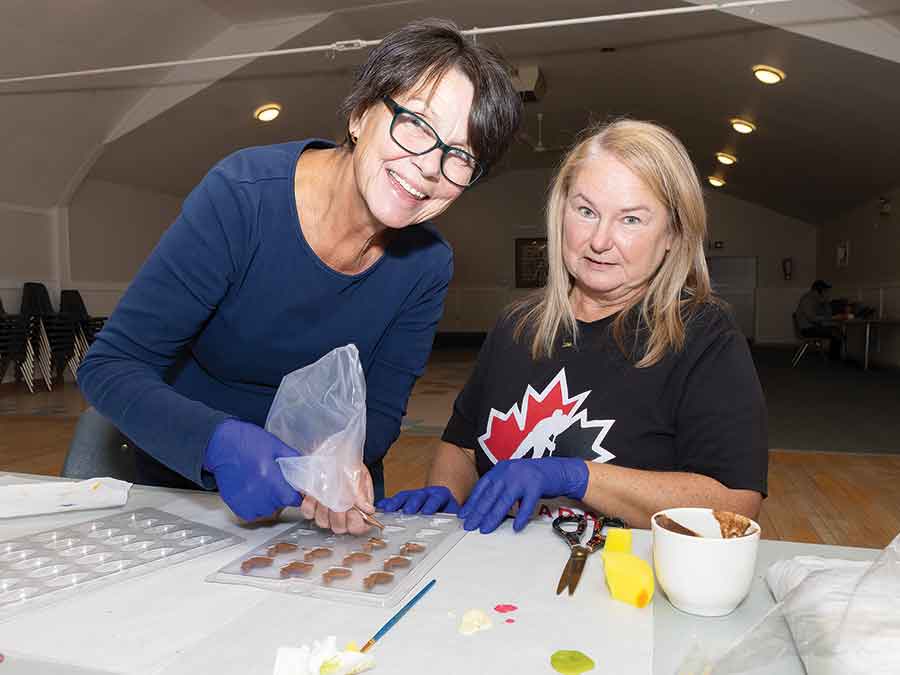
Kim Admiraal, left, and Alli Allec prepare chocolate bunnies to fill the smash eggs they created during an Easter smash egg workshop in Warren
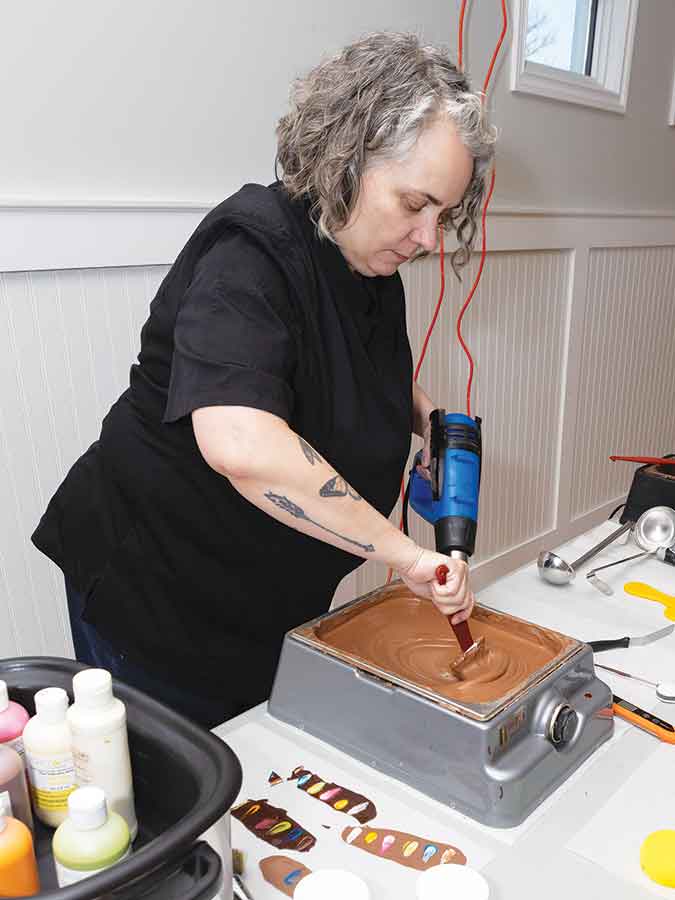
Easter is one of the busiest seasons for chocolatiers, with demand for molded bunnies, filled eggs and decorative treats surging in the weeks leading up to the holiday. While store-bought options remain popular, McKinley said more people are trying their hand at making confections at home.
This year, McKinley said one treat in particular is capturing attention: the smash egg. Last Friday she hosted an Easter Smash Egg workshop in Warren.
“A big trend over the last few weeks has been exactly what we are doing tonight — a smash egg,” she said. “It’s like a chocolate piñata.”
The oversized hollow eggs are filled with smaller treats such as chocolates, gummies and sprinkles, then broken open — often with a small hammer — on Easter.
The connection between Easter and chocolate has deep historical roots.
“Eggs have historically represented rebirth and fertility, and are a potent symbol of spring,” McKinley said. “When chocolate became popular in the Victorian era, making chocolate Easter eggs was a natural extension of this symbolism.”
She noted that early chocolate eggs were quite different from today’s smooth, sweet versions. Eggs were often forbidden during Lent, so at the end of the fast there would be a surplus that would be decorated to mark the end of the fast — a tradition that later carried over into chocolate-making.
“Easter eggs as we know them, sweet and smooth were pioneered in Great Britain in the 1870s, and the tradition carries on,” she said.
For those looking to try chocolate-making at home, McKinley recommends starting simple and focusing on quality ingredients.
“Buy real chocolate,” she said. “Real chocolate is more expensive than candy melts but tastes much better.”
One beginner-friendly option is making truffles using ganache, a mixture of chocolate and cream that can be rolled into balls and coated with toppings like nuts, coconut or cocoa powder.
Technique also plays a key role, particularly when it comes to tempering — a process that gives chocolate its signature shine and texture.
“The fat that gives chocolate its structure is called cocoa butter, and it has a tendency to melt and then set very chaotically,” McKinley said. “Tempering is melting the cocoa butter and then controlling its cooling so that you get a smooth chocolate with a glossy finish and a perfect snap in your mouth.”
She said tempered chocolate tastes better, has a longer shelf life and looks more appealing than untempered chocolate.
For McKinley, who has spent more than two decades in the industry — including running Prairie Girl in Winnipeg, founding CocoaNymph in Vancouver and serving as master chocolatier for Purdys Chocolatier, the appeal of chocolate goes beyond technique.
“I love the joy that chocolate brings to people,” she said. “That is my absolute favourite thing.”
McKinley who grew up in Stonewall is now working as a consultant with chocolate companies around the world with her primary client based in Belize and teaching through Ecole Chocolat, an online chocolate school, McKinley continues to share her expertise while helping others discover the craft.
“I have been working for Ecole Chocolat since 2017, and I still teach for them — I develop their curriculum and teach specialty classes for them online, and sometimes travel to explore chocolate in France.”